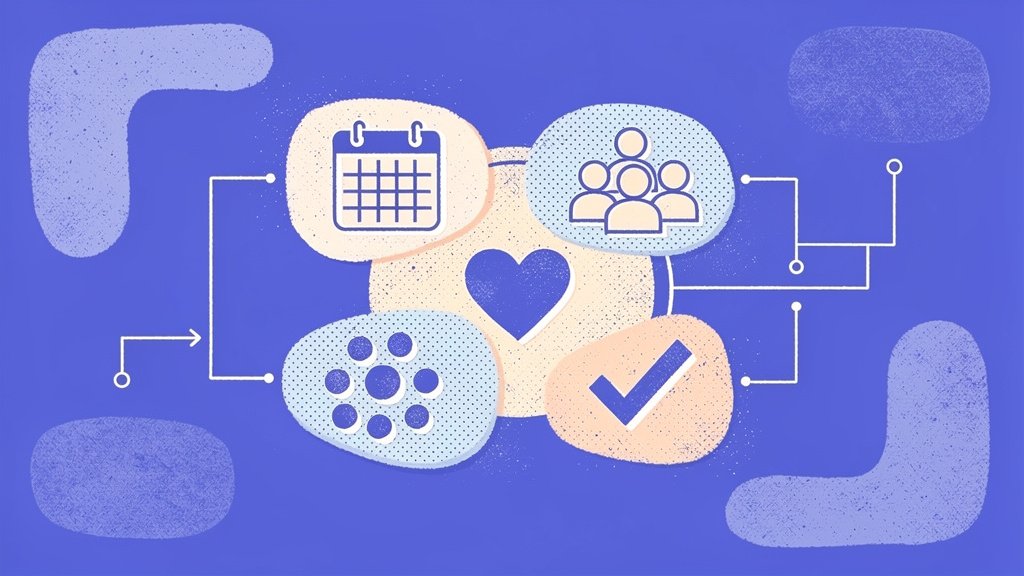
Looking, I’ll be honest – event planning for nonprofits has gotten complicated. There’s this constant pressure to deliver amazing fundraising events while your team gets smaller and your budget tighter. But here’s the thing: the right event management software actually transforms those messy spreadsheets and manual processes into something that works for you instead of against you. By utilizing effective fundraising strategies for nonprofits, organizations can create more engaging and memorable events that resonate with their supporters. It’s essential to leverage technology not only to streamline logistics but also to enhance donor engagement and maximize contributions. With the right approach, even small teams can achieve remarkable results, turning potential challenges into opportunities for growth.
We’re going to walk through the best event management platforms for nonprofits in 2026. You’ll learn what makes each one special, how to match software to your actual needs (not what some sales deck says you need), and practical ways to turn event attendees into long-term supporters. In addition to event management platforms, leveraging email marketing tools for nonprofits can significantly enhance your outreach efforts. These tools can help you craft personalized messages that resonate with your audience, increasing engagement and fostering a sense of community. By combining effective event management and strategic email campaigns, you can create a powerful synergy that drives results.
Why Event Management Software Matters for Mission-Driven Work
Manual event planning drains resources that should fuel your mission. When your development team burns hours building registration forms, reconciling payments, and manually updating donor records, they’re stuck doing busywork instead of relationship-building.
Modern platforms deliver three core advantages:
Unified donor intelligence: Centralized dashboards connect event attendance with giving histories, volunteer participation, and engagement scores. This 360-degree view helps you personalize outreach and convert one-time attendees into lifetime supporters.
Hybrid flexibility: Post-pandemic, supporters expect options. The best platforms handle in-person galas, virtual webinars, and hybrid conferences seamlessly.
Revenue acceleration: Automated workflows for ticketing, payments, and follow-ups reduce friction throughout the donor journey. In our experience, Funraise users leveraging integrated event tools report 52% average recurring revenue growth, often triggered by event-to-monthly-pledge conversion strategies (Funraise Growth Statistics).
Protip: Before selecting software, audit your current event workflow. Map every touchpoint from registration to post-event thank-you. Identify the three most time-consuming manual tasks – these become your non-negotiable automation requirements.
The 7 Best Platforms for Nonprofit Events in 2026
After analyzing features, pricing, nonprofit-specific functionality, and verified user ratings, these seven platforms represent the strongest options for US-based organizations:
| Software | Best For | Standout Features | Pricing Model |
|---|---|---|---|
| Funraise | Fundraising-integrated events | Native CRM sync, silent auctions, SMS updates, AI forecasting | Free tier; scales with growth |
| Zeffy | Zero-fee ticketing | Scannable e-tickets, branded forms, multi-payment options | Free (donor-funded model) |
| Givebutter | Small-to-mid events | QR check-ins, unlimited events, volunteer management | Free core platform |
| Eventbrite | Public-facing events | Marketplace discovery, assigned seating, mobile check-in | Pay-per-ticket (~2.5% fee) |
| Cvent | Enterprise hybrid events | AI session recommendations, 360° reporting, donor-event sync | Quote-based pricing |
| Bizzabo | Engagement-focused conferences | Live polls, personalized agendas, content libraries | Custom enterprise pricing |
| EventMobi | Association events | Mobile apps, virtual streaming, nonprofit discounts | Discounted nonprofit rates |
Common Challenges We See Daily
Working directly with hundreds of nonprofit leaders, we’ve identified recurring pain points that absolutely cripple event success.
The integration nightmare: A national health nonprofit came to us after their gala raised $180,000 – but their event platform didn’t sync with their CRM. Staff spent 40 hours manually entering data, missing the critical window for timely thank-yous. Automated integrations aren’t luxury features anymore.
Platform bloat paralysis: One education nonprofit paid for an enterprise tool with 200+ features but only used ticketing and email. They were overwhelmed, undertrained, and overpaying. Sometimes right-sizing matters more than maximizing features.
Post-event donor abandonment: A wildlife conservation group consistently attracted 300+ attendees to their annual fundraiser but saw minimal recurring gift conversion. Without automated nurture workflows triggered by event participation, they left relationship-building to chance.
These aren’t edge cases. They represent systemic challenges that the right software – matched to your capacity and goals – eliminates entirely.
Budget-Friendly Champions: Zeffy and Givebutter
For resource-constrained nonprofits, Zeffy and Givebutter eliminate platform fees entirely. Zeffy’s zero-fee model supports Apple Pay, custom event banners, and branded registration forms – perfect for community walks or small galas (Bloomerang).
Givebutter adds QR code check-ins, daily Stripe payouts, and unlimited event hosting to its free tier. Both platforms excel for organizations hosting recurring events with fewer than 500 attendees. We’ve found that peer-to-peer fundraisers raise 2x industry averages when integrated with event campaigns (Funraise Growth Statistics) – a strategy both platforms facilitate through team fundraising features.
Start with free tiers for pilot events. Test registration workflows, payment processing, and basic reporting before committing to premium tools. Many nonprofits discover that free platforms meet 80% of their needs permanently.
AI-Powered Prompt for Event Planning
Okay, I know dropping an AI prompt in here might seem a li’l cheesy, but hear me out. Copy and paste this into ChatGPT, Claude, Gemini, or your preferred AI assistant to jumpstart your event strategy:
I'm planning a [EVENT_TYPE] for a nonprofit focused on [MISSION_AREA]. Our goal is to raise [FUNDRAISING_GOAL] from approximately [EXPECTED_ATTENDEES] attendees. Create a comprehensive event timeline with promotional milestones, volunteer task assignments, donor engagement touchpoints, and post-event follow-up sequences. Include creative engagement ideas that align with our mission and budget-friendly tactics for maximizing attendance and revenue.

Variables to customize:
- EVENT_TYPE (e.g., "hybrid gala," "virtual auction," "5K walk")
- MISSION_AREA (e.g., "animal welfare," "education equity")
- FUNDRAISING_GOAL (e.g., "$50,000")
- EXPECTED_ATTENDEES (e.g., "200")
That said, while AI assistants provide valuable brainstorming support, daily nonprofit operations benefit most from platforms like Funraise that embed AI directly into your workflow – forecasting giving patterns, optimizing ask amounts, and surfacing insights within your operational context rather than requiring separate prompt engineering.
Enterprise Powerhouses: Cvent, Bizzabo, and EventMobi
Organizations hosting conferences with 1,000+ attendees or complex hybrid formats require enterprise-grade infrastructure. Cvent unifies donor data with event intelligence, offering live polling for hybrid galas and AI-powered session recommendations that personalize attendee experiences (Eventtia).
Bizzabo transforms conferences into engagement laboratories with interactive Q&A sessions, networking lounges, and detailed analytics tracking which sessions drive the highest donor conversion. One unconventional tactic we’ve seen work: Use Bizzabo’s live Q&A feature for “donor spotlight moments” during events, turning longtime supporters into public advocates while they’re most emotionally connected to your mission.
EventMobi specializes in association events with nonprofit discount structures, mobile apps for complex agendas, and built-in virtual streaming. With 80% of in-person event hosts meeting their 2025 fundraising goals (OneCause), these premium hybrid capabilities clearly deliver ROI.
Protip: When evaluating enterprise platforms, negotiate nonprofit pricing upfront and explore multi-year bundles with CRM integrations. Many providers offer 20-30% discounts for nonprofits committing to longer contracts with integrated tech stacks.
Funraise and Eventbrite: Integration Excellence
Funraise embeds events within comprehensive fundraising ecosystems rather than treating them as isolated revenue moments. Silent auction tools, QR code scanning via mobile app, native CRM synchronization, and automated post-event nurture sequences create conversion pathways from attendees to monthly donors. Organizations using Funraise’s analytics-driven approach report 7x online fundraising growth (Sisense Success Story).
“The nonprofits winning in 2026 aren’t just hosting better events – they’re building integrated donor journeys where events serve as relationship accelerants, not transactional endpoints.”
Funraise CEO Justin Wheeler
Eventbrite excels at public event discovery, leveraging its marketplace to attract new supporters beyond your existing database. Assigned seating for auctions, robust mobile check-in, and integration capabilities via Zapier make it versatile for public-facing fundraisers. However, Eventbrite requires third-party connections for deep CRM sync – a native feature in Funraise’s platform.
Integration comparison:
| Platform | Native CRM Sync | Auction Tools | Virtual Streaming | Mobile App |
|---|---|---|---|---|
| Funraise | Yes | Silent auctions, real-time bidding | Embedded livestreams | QR scanning |
| Eventbrite | Via Zapier | Basic functionality | Limited support | Check-in only |
2026 Trends Shaping Nonprofit Events
Hybrid formats dominate the landscape, with AI personalization emerging as the differentiator between good and exceptional events. 97% of nonprofits held events in 2025 (Bonterra Tech), cementing their role as revenue anchors. The most successful organizations leverage:
- AI-driven personalization: Platforms like Cvent recommend sessions based on attendee profiles, while Funraise’s AI forecasting predicts optimal ask amounts for individual donors during events,
- Mobile-first experiences: From text-to-give during live appeals to app-based networking, supporters expect smartphone-optimized interactions throughout events,
- Data-driven ROI measurement: Beyond gross revenue, leading nonprofits track lifetime value of event attendees, engagement scores, and multi-year retention rates through integrated dashboards.
Funraise clients achieve 50% donation form conversion rates in post-event campaigns (Funraise Growth Statistics) – proof that strategic technology deployment transforms event participation into sustained giving.
Selecting Your Ideal Platform
Match software complexity to organizational capacity and event scale. A 100-person volunteer-run organization needs different infrastructure than a $5M+ nonprofit hosting multi-city conferences.
Essential evaluation criteria:
- Event volume and size: Free platforms (Zeffy, Givebutter) suit organizations hosting fewer than 500 attendees; enterprise tools (Cvent, Bizzabo) scale to 5,000+,
- Must-have features: Ticketing, payment processing, basic reporting – no exceptions,
- High-value additions: Silent auction tools, mobile apps, advanced analytics, SMS capabilities,
- Integration requirements: Native CRM connections save hundreds of staff hours annually,
- Support infrastructure: US-based teams with nonprofit expertise prevent crisis moments during live events.
Practical implementation approach: Demo 2-3 finalist platforms. Set a one-week setup deadline for testing. If configuration requires complex technical support, the platform likely exceeds your operational capacity.
Protip: Segment attendees during registration using custom questions. Track VIP upgrade interest, volunteer availability, and giving capacity indicators. Post-event, sync this intelligence to your CRM for targeted cultivation – converting 20% of attendees to monthly donors through strategic nurture sequences.
Start Where You Are, Build Momentum
Events remain the strongest revenue engine for nonprofits (Bonterra Tech), but success requires matching ambition with appropriate infrastructure. 81% of Americans participate in nonprofit events annually (Eventtia), representing massive fundraising potential when you eliminate friction from the supporter journey.
For most US nonprofits, one approach is testing Funraise’s free tier. You’ll access integrated ticketing, donor management, and analytics without upfront investment or long-term commitments. As your events scale, the platform grows with you – adding auction capabilities, advanced segmentation, and AI-powered insights that transform one-night fundraisers into year-round relationship builders.
The organizations achieving that 77% success rate (OneCause) aren’t lucky – they’re strategic. They’ve eliminated manual processes, unified donor data, and built technology stacks that multiply staff capacity rather than drain it. Your next successful event starts with the right software foundation.
About the Author

Board giving: how to reach 100% board participation without an awkward meeting
Every development director knows that squirm. You're in a board meeting, someone asks, "So, where are we on board giving?" and suddenly the room gets very quiet. Nobody wants to be the person who hasn't given yet. Nobody wants to be the executive director who has to call them out either. It's an awkward little…
Pledge Donation vs. Immediate Gift: Which Should You Use?
Look, here's the thing about pledge donations versus immediate gifts: it's not really an either-or situation, even though most nonprofits treat it that way. The difference between these two approaches genuinely matters for your cash flow, how you build relationships with donors, and whether you're growing revenue in a way that actually sticks. In this…
The Ultimate Fundraising Strategy Blueprint for Modern NGOs
You've probably noticed the fundraising landscape feels a bit like quicksand these days. Between potential federal funding cuts, fierce competition for grants, and shifting donor behaviors, it's easy to feel like you're running twice as fast just to stay in place. But here's the thing: working harder isn't the answer. What we've found is that…