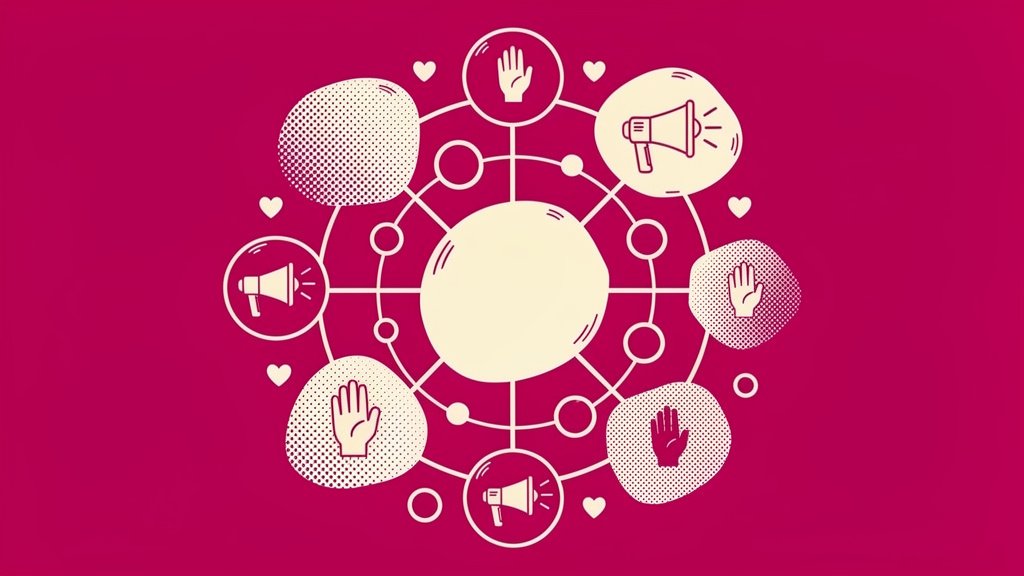
Look, peer-to-peer fundraising gets talked about like it’s just another tactic in the nonprofit playbook. But here’s the thing: when you do it right, it’s actually a force multiplier that turns your supporters into a passionate acquisition engine. The beauty lies in tapping into personal networks that your traditional marketing could never touch. And get this: nonprofits running cause-specific P2P campaigns raise twice as much as top industry programs (Funraise). That’s the power of trusted relationships doing the heavy lifting.
So what we’re diving into here is how to build what we call a Social Street Team. We’re borrowing tactics from influencer marketing and grassroots movements to maximize that multiplier effect. You’ll learn how to recruit the right people, equip them properly, and actually measure what’s working so you can scale what matters.
The Science Behind the Multiplier Effect
The magic of P2P lies in some pretty wild math. One supporter doesn’t just give once; they unlock dozens of new donors through social proof and authentic storytelling. Donors acquired through peer-to-peer fundraising give 2.5 times more than those from direct appeals, with campaigns achieving a 71% success rate versus just 22% for traditional methods (Nonprofit Source). Not too shabby, right?
Here’s how the network dynamics actually play out:
- Network leverage: each fundraiser extends your reach to 300-500+ connections beyond your database,
- Higher engagement: 56% of donors give more when connected to a peer fundraiser (Nonprofit Source),
- Fresh donor pipeline: 75% of P2P donations come from first-time givers (Nonprofit Source).
And the Funraise data backs this up beautifully. P2P fundraisers average $1,220 raised, nearly 10 times a standard one-time gift of $125 according to M+R Benchmarks. We’re not talking incremental growth here. This is transformational scale.
Protip: Don’t wait for perfect campaign conditions. Launch a pilot P2P initiative with just 10-15 passionate supporters to test your multiplier effect before scaling. You can start for free with platforms like Funraise to validate your approach with zero financial commitment.
Defining Your Social Street Team
A Social Street Team reimagines P2P fundraisers as grassroots evangelists, kinda like how music promoters built underground buzz for emerging artists back in the day. (Yeah, we’re borrowing from entertainment marketing, but stay with us.) This positions your volunteers, micro-influencers, and passionate supporters as the promotional engine for your cause, making abstract needs feel urgent and deeply personal.
Your street team members aren’t traditional major donors. They’re connector nodes in social networks who amplify your message through authentic advocacy.
| Trait | Description | Impact Example |
|---|---|---|
| Passionate Advocates | Deeply connected to your mission | Share authentic stories that build trust instantly |
| Network-Rich | Strong social circles (500+ connections) | Extend organizational reach 10-20x per person |
| Content Creators | Comfortable with photos/videos/stories | Campaigns with video content raise 4x more (WP Experts) |
| Motivators | Enjoy challenges and friendly competition | Drive 18% yearly increase from repeat participants (Peer to Peer Forum) |
This structure democratizes fundraising beyond wealth-based donor pyramids, pulling in younger advocates who dominate platforms like Instagram and TikTok.
Common Challenges Before Building Your Team
Before you jump into recruitment, let’s talk about the daily struggles we see from nonprofit leaders. Because trust us, we’ve seen these patterns repeat themselves way too many times.
The “Ghost Team” Syndrome: You recruit 50 enthusiastic fundraisers, but only 8 actually activate their pages. Without proper onboarding, training materials, and consistent communication, most volunteers fade into silence within the first week.
The Template Trap: Generic fundraising pages with bland messaging like “Help support [Organization Name]” get zero shares. These cookie-cutter approaches lack personal narrative hooks that actually compel people to click and donate.
The Measurement Black Hole: Teams launch campaigns but can’t track which recruitment channels work, which fundraisers drive the most revenue, or what messaging resonates. Flying blind means you can’t iterate or improve.
The One-and-Done Problem: After a successful event, you fail to nurture your street team for future campaigns, losing 70%+ of volunteer fundraisers and rebuilding from scratch every cycle.
These challenges aren’t insurmountable, but they do require intentional systems and the right technology infrastructure.
Recruiting Your Connector Army
Build your team by targeting “connectors” rather than just wealthy donors. These are supporters with relational capital, people who naturally bridge different social circles and love sharing causes they believe in. Currently, 33% of nonprofits worldwide use P2P platforms (Nonprofit Tech for Good), meaning there’s significant opportunity for organizations willing to invest in this approach.
Start your recruitment by mining these segments:
- past event participants who’ve already demonstrated commitment,
- active volunteers with proven passion for your mission,
- board members’ networks beyond their personal giving capacity,
- corporate partners for workplace fundraising teams.
Protip: Focus on micro-influencers with 10-50K followers in your local area rather than chasing celebrity endorsements. These authentic voices deliver higher engagement rates and deeper community trust.
Use a multi-channel recruitment approach: segmented emails highlighting the impact potential, social media challenges, and in-person “Street Team Launch Parties” (virtual or physical) complete with branded swag, mission training, and collective goal-setting. Platforms like Funraise streamline this with auto-generated personal fundraising pages that make signup frictionless. Test the free tier to experience how reducing technical barriers dramatically increases activation rates.
AI Prompt: Your P2P Campaign Strategy Generator
Ready to design your street team campaign? Copy and paste this prompt into ChatGPT, Claude, Gemini, or your preferred AI assistant:
I'm launching a peer-to-peer fundraising campaign for [CAUSE/MISSION]. My target audience is [DEMOGRAPHIC/PSYCHOGRAPHIC DESCRIPTION]. I want to recruit [NUMBER] street team members who will fundraise over [TIMEFRAME].

Please create:
1. A recruitment email sequence (3 emails) to activate potential street team members
2. Five social media post templates fundraisers can customize
3. A gamification structure with three achievement tiers
4. Weekly communication topics to keep the team motivated throughout the campaign

Make the messaging authentic, personal, and focused on storytelling rather than transactional asks.
Variables to customize:
- [CAUSE/MISSION]: Your specific nonprofit focus,
- [DEMOGRAPHIC/PSYCHOGRAPHIC DESCRIPTION]: Age, interests, values of ideal fundraisers,
- [NUMBER]: Your street team size goal,
- [TIMEFRAME]: Campaign duration.
While AI tools provide excellent starting frameworks, daily fundraising work benefits from integrated AI solutions like those built into Funraise, which understand your full operational context (donor history, campaign performance, organizational goals) and deliver smarter, context-aware recommendations exactly where you need them.
Equipping Your Team for Maximum Impact
Your street team needs plug-and-play tools, not homework assignments. Provide customizable fundraising pages, pre-written email templates, shareable social graphics, and real-time impact thermometers that show progress toward goals.
Funraise’s P2P features enable seamless Facebook integration, which produces an 83% increase in funds raised for users (Funraise). The lesson? Remove friction at every step.
Multi-Channel Promotion Arsenal
| Channel | Best Practice | Expected Impact |
|---|---|---|
| Social Media | Hashtag challenges, Instagram stories with donation stickers | 76% donation increase via Facebook integration (WP Experts) |
| Email/Text | Automated milestone reminders, peer progress updates | Higher activation and re-engagement |
| Virtual Events | Kickoff parties, midpoint rallies, celebration finales | 46% of organizations successfully used virtual events (WP Experts) |
| Offline Touchpoints | QR codes at gatherings, printed mini-posters | Bridges digital divide for older demographics |
Sample social post template: “I’m raising funds for [CAUSE] because [PERSONAL STORY IN 1-2 SENTENCES]. Your $50 means [TANGIBLE IMPACT]. Join me? [LINK]”
Notice the specificity. Generic asks die in newsfeeds. Personal narratives with concrete outcomes convert.
“The organizations that will thrive are those that empower their supporters to become fundraisers, turning passive donors into active advocates who multiply impact through their networks.”
Funraise CEO Justin Wheeler
Protip: Gamify with achievement tiers (Bronze at $500 raised, Silver at $1,000, Gold at $2,000+) that unlock exclusive mission updates, insider content, or recognition perks. Friendly competition drives performance without feeling manipulative.
Mastering the Courageous Ask
The difference between mediocre and exceptional P2P results lives in ask quality. Train your street team to make bold, story-driven requests rather than apologetic pleas. 91% of donors give more when they clearly see impact (WP Experts).
Effective ask frameworks:
Birthday/Anniversary Fundraisers: “Instead of gifts this year, I’m raising funds for [CAUSE] that changed my life when [STORY]. Will you celebrate with me by donating?”
Matching Challenges: “A generous donor will match every dollar up to $5,000. Your gift literally doubles right now.” These create 2.5x revenue surges according to (WP Experts).
Team Huddles: Weekly 15-minute Zoom check-ins where fundraisers share what’s working, troubleshoot obstacles, and celebrate wins publicly. Peer learning accelerates everyone’s performance.
The shift from transactional requests to value-aligned invitations transforms conversion rates. Role-play these scenarios during training so asks feel natural, not scripted.
Measuring What Matters
You can’t optimize what you don’t measure. Industry benchmarks for successful P2P campaigns target 39% campaign success rates, $568 average gifts, and 482 donors per event (WP Experts). Funraise dashboards track these KPIs in real-time alongside critical multiplier metrics:
- Activation rate: percentage of registered fundraisers who actually start fundraising,
- Network expansion: new donors acquired versus existing database,
- Retention trajectory: 50% P2P donor retention versus 27% for traditional channels (WP Experts),
- Lifetime value: repeat P2P participants raise an average of $4,425 after five years (Peer to Peer Forum).
Organizations using Funraise grow online revenue 73% year-over-year (Funraise), three times the industry average, largely through P2P integration and optimization.
Post-campaign, survey your street team: What messaging resonated? Which tools helped most? What frustrated them? Scale what worked and eliminate friction points.
Protip: Set “micro-win” alerts at 25%, 50%, and 75% of individual goals. Real-time celebration via team messaging channels maintains momentum during the inevitable mid-campaign energy dip.
Advanced Multiplier Strategies
Take your street team to the next level by integrating true influencer partnerships. The top 30 U.S. P2P events raised $1.14 billion in 2024, up 3% from the previous year (NonProfit PRO). Organizations achieving these results blend traditional peer networks with strategic influencer collaboration.
Consider nano-influencers (1K-10K followers) who genuinely connect with your mission. Give them personalized fundraising pages and co-create content that feels authentic to their audience. Digital P2P fundraising hit $154.9 million in 2021, up 30% (Kindsight), demonstrating the channel’s explosive growth potential.
Unconventional approach: Launch cross-cause masterminds where you partner with aligned (non-competing) organizations to share street team training, tools, and even fundraisers. A climate nonprofit and outdoor recreation group might discover significant audience overlap, multiplying both organizations’ reach.
Protip: Create a “Street Team Alumni Club” that gives past fundraisers lifetime access to future campaigns, exclusive mission updates, and early registration. This transforms one-time volunteers into a permanent acquisition asset, dramatically improving lifetime value and reducing recruitment costs for subsequent campaigns.
Your Next Move
The peer-to-peer multiplier effect isn’t theoretical. It’s a proven growth engine that doubles fundraising results while building deeper community engagement. Your supporters want to be part of something bigger than a single donation. They want to be advocates, influencers, and change-makers within their own networks.
Start small. Recruit 10-15 passionate connectors for a pilot campaign. Equip them properly. Measure ruthlessly. Iterate quickly.
And remember: the right technology platform eliminates 80% of the friction that kills P2P campaigns. Funraise offers a free tier perfect for testing these strategies without financial risk or technical overwhelm. Your social street team is waiting. Give them the tools to multiply your mission.
About the Author


1) Why Most Nonprofit Strategies Fail: The Glass-Chewing Truth
You've sat through dozens of strategy meetings, right? Whiteboards covered in ambitious goals, spreadsheets showing exponential growth curves, slides promising transformational impact. Fast forward six months and, well, nothing's really changed. Revenue's stuck, your team's exhausted, and the mission feels like it's drifting. Here's the thing: most nonprofit strategies don't fail because of bad planning.…

2) Closing the Nonprofit Technology Gap: Stop Duct-Taping Your Mission
Your mission deserves better than patchwork tech held together with digital duct tape and prayers. Look, here's the thing. With over 1.4 million nonprofits in the US, most operating under $1M in annual revenue, the "technology gap" isn't just annoying. It's a systemic barrier that caps your impact before you even begin. In this guide,…
3) Modern Nonprofit Board Governance: Moving Boards to Mission Growth
Most nonprofit boards live in a state of financial anxiety, spending way more time worrying about budget cuts than imagining what transformational impact could look like. Here's the thing: board members are naturally cautious (it's basically written into their job description), but that defensiveness can freeze the very growth that'd make your mission stronger. So…