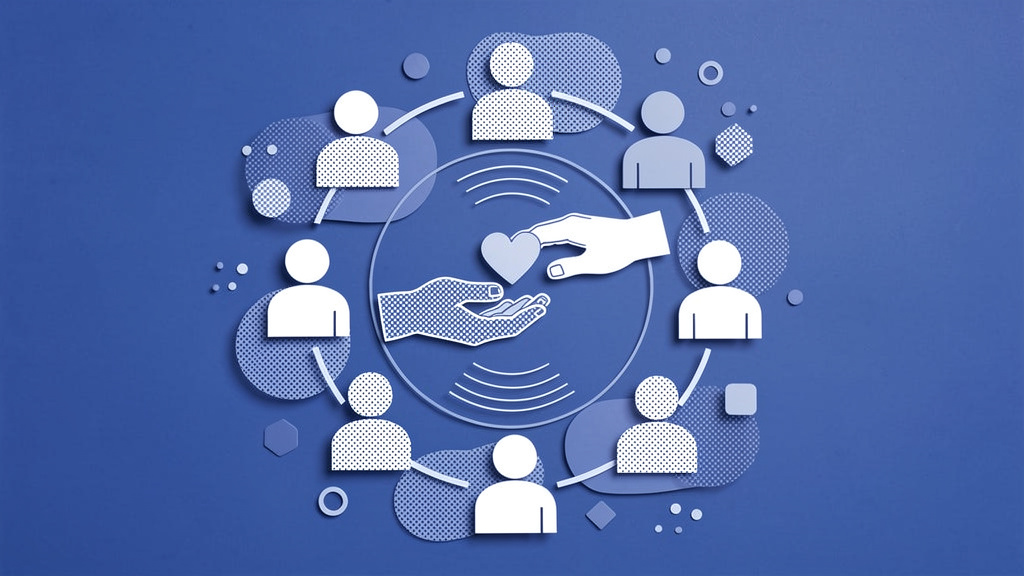
Peer-to-peer fundraising turns your supporters into active fundraisers, multiplying your reach through authentic personal connections that you’d never access otherwise. When you execute it strategically, P2P campaigns create a ripple effect that extends far beyond your traditional donor base.
But here’s the thing: success requires more than enthusiasm. While campaign volume rose 18% in 2024, revenue per participant actually fell 20% to $244 (Raisely). That gap? Nonprofits activating fundraisers without proper support systems. We figured we should do a li’l deep dive into the strategic framework that’ll help you avoid that trap.
Understanding the P2P Fundraising Mechanism
Peer-to-peer fundraising leverages your supporters’ personal networks by empowering them to fundraise on your behalf. Instead of your organization making all the asks, advocates share your mission with their friends, family, and colleagues. These authentic appeals consistently outperform institutional requests.
The psychological principle driving this? Social proof. When someone receives a fundraising request from a trusted friend rather than an organization, they’re significantly more likely to give. You’re essentially deputizing passionate supporters to become mini-development teams, each accessing donor pools that would cost thousands in acquisition expenses to reach through traditional marketing.
Key benefits include:
- expanded reach without proportional marketing spend,
- higher engagement as fundraisers become invested advocates,
- improved retention (returning participants raise 18% more annually on average (Peer to Peer Forum)),
- new donor acquisition from previously untapped networks.
Protip: Segment your potential fundraisers by influence type. We’ve found that micro-influencers with 100-1,000 followers often outperform those with massive followings. Why? Niche audiences trust their recommendations more deeply, particularly for cause-specific campaigns.
Setting Strategic SMART Goals
Look, generic goals kill P2P campaigns. “Raise as much as possible” provides zero actionable direction for fundraisers or your team. Instead, build measurable targets across multiple dimensions:
| Goal Type | Description | Example | Tracking Metric |
|---|---|---|---|
| Overall Revenue | Total campaign target based on historical data | $50,000 | Total donations received |
| Per-Fundraiser Average | Achievable individual goal | $500 | Average raised per active participant |
| Participation | Number of activated fundraisers | 100 active fundraisers | Sign-ups and activation rate (aim for 76% per Raisely) |
| Network Engagement | Social amplification and new donor acquisition | 1,000 social shares | New donors from fundraiser networks |
Break these into actionable tiers. If past campaigns averaged $300 per fundraiser, set a realistic $350 target with stretch goals at $500. Use real-time dashboards to monitor progress and adjust messaging mid-campaign when you spot trends.
One thing to factor in: the top 20% of fundraisers typically generate 80% of total revenue. So your strategy must simultaneously support average performers while giving top fundraisers resources to excel.
Choosing Your P2P Platform
Your technology stack makes or breaks execution. Essential features include:
- branded customizable pages that fundraisers can personalize without technical skills,
- social sharing integration (particularly Facebook, which research identifies as critical to campaign extent),
- automated communication sequences for fundraiser encouragement,
- real-time leaderboards to gamify competition,
- mobile optimization since most sharing happens on phones,
- CRM integration for seamless data flow to your donor database.
In our experience, Funraise users raise 2x more than industry averages with 50% donation form conversion rates (Funraise). The platform’s no-code drag-and-drop editor eliminates technical friction, while built-in automation handles encouragement emails that would otherwise consume staff hours.
And here’s the fun part: you can start with Funraise’s free tier with zero commitments. There’s minimal risk in testing whether modern P2P-specific tools outperform your current approach. Many nonprofits discover their generic donation platforms simply weren’t built for the unique demands of peer-to-peer campaigns.
Recruiting and Onboarding Your Fundraising Army
Target passionate advocates first: past donors who’ve given consistently, active volunteers, board members, and anyone who’s publicly supported your cause. These folks already understand your mission and have networks likely to care.
Your recruitment messaging should emphasize impact multiplication: “Your $100 donation helps 5 families. Your fundraising page reaching 200 friends could help 50 families.”
Onboarding checklist for new fundraisers:
- Share compelling “why” stories and quantified impact stats,
- Provide ready-to-use templates for emails, social posts, and text messages,
- Help them set personal goals tied to specific outcomes,
- Equip them with their unique fundraising page link,
- Schedule a follow-up check-in within 72 hours.
Unconventional approach: Host a virtual kickoff challenge where recruits compete in a 24-hour mini-fundraise during onboarding. This builds momentum, teaches skills in a low-stakes environment, and identifies your natural top performers early.
“The most successful peer-to-peer campaigns treat fundraisers as partners, not just volunteers. Give them ownership, tools, and recognition, and they’ll move mountains for your mission.”
Funraise CEO Justin Wheeler
Protip: Create tiered onboarding based on commitment level. Someone pledging to raise $5,000 needs different support than someone targeting $250. Personalize your resources accordingly rather than using one-size-fits-all approaches.
Equipping Fundraisers With Success Tools
The difference between activated and abandoned fundraisers often comes down to resources. Provide comprehensive toolkits including:
Storytelling assets:
- pre-written impact statements they can personalize,
- beneficiary testimonial videos,
- data visualizations showing need and your solutions.
Automated milestone encouragements:
- emails triggered at 50% of goal: “You’re halfway there!”,
- 75% push notifications with suggested next steps,
- final 48-hour urgency messaging.
Branded creative assets:
- social media graphics in multiple formats,
- fundraising thermometer images showing progress,
- email signature banners.
Funraise’s toolkit approach saves countless staff hours by centralizing everything fundraisers need in one dashboard. The platform handles technical complexity behind the scenes while presenting a simple interface to non-technical volunteers.
AI Prompt: Generate Your Campaign Strategy
Copy and paste this prompt into your preferred AI tool (ChatGPT, Claude, Gemini, Perplexity) to generate a customized launch plan:
Create a detailed 8-week peer-to-peer fundraising campaign timeline for [ORGANIZATION NAME] targeting [FUNDRAISING GOAL]. Our cause focuses on [CAUSE/MISSION], and we expect to recruit [NUMBER] fundraisers. Include weekly staff tasks, fundraiser communication touchpoints, content themes, and key milestones. Provide specific email subject lines and social media post ideas aligned with our mission.Variables to customize:
- [ORGANIZATION NAME],
- [FUNDRAISING GOAL],
- [CAUSE/MISSION],
- [NUMBER] of expected fundraisers.
While AI prompts provide excellent starting frameworks, daily workflow tools matter more for execution. Solutions like Funraise integrate AI components directly into your operational context, providing intelligent suggestions as you build campaigns rather than requiring constant copying between platforms. This contextual AI understands your specific donor data, campaign history, and organizational patterns.
Marketing Your Campaign Across Channels
Develop a cross-channel promotional calendar rather than random posting:
| Channel | Tactic | Expected Impact |
|---|---|---|
| Weekly progress updates with leaderboard | 20-30% open rates | |
| Social Media | Fundraiser spotlights and countdown posts | Viral network growth through shares |
| Website | Dedicated P2P campaign hub page | Centralized information and donations |
| SMS | Milestone alerts and final push reminders | 45%+ engagement rates |
Digital-first P2P campaigns raised $154.9M in 2021, up 30% year-over-year (Kindsight). That’s not just a feel-good number, it demonstrates the channel’s effectiveness.
Use user-generated content strategically. Repurpose your top fundraisers’ authentic posts in your organizational ads. Their genuine enthusiasm converts better than polished marketing copy because it carries peer credibility.
Launch with a live event (virtual or in-person) creating excitement and community. Announce early leaders, share impact stories, and give fundraisers their first shareable moment.
Daily Challenges We See (And How to Solve Them)
Working with hundreds of nonprofits, we encounter these scenarios repeatedly:
The “Set It and Forget It” Disaster: Organizations launch campaigns, then provide zero mid-campaign support. Fundraisers lose momentum after initial enthusiasm. Solution: Implement automated weekly check-ins and manual outreach to anyone who hasn’t raised funds in 10 days.
Template Paralysis: Providing 47 different email templates overwhelms rather than helps. Fundraisers freeze choosing between options. Solution: Offer three proven templates (emotional story, statistical case, urgent need) and make personalization optional, not required.
Technology Friction: Fundraisers abandon page setup because platforms require 15 fields and technical knowledge. Solution: Minimize required fields to name, goal, and one-sentence why. Everything else should be optional or auto-populated.
The Silent Majority: 60% of recruits never activate their pages. Solution: Make the first ask ridiculously easy. “Text three friends this pre-written message” beats “set up your complete fundraising page” for initial activation.
These patterns emerge across organization sizes and causes. The common thread? Underestimating friction and overestimating initial commitment.
Managing and Optimizing During Campaign
Monitor these KPIs daily:
- activation rate (percentage of recruits who create pages),
- average raised per active fundraiser,
- new donor acquisition from networks,
- social sharing velocity.
Combat mid-campaign drop-off with gamification elements. Funraise’s achievement badges and leaderboards keep competition friendly while maintaining momentum. One case study showed 41 participants staying engaged through structured milestones (OneCause).
Unconventional tactic: Introduce “fundraiser swaps” where struggling participants pair with successful ones for 15-minute mentorship calls. This builds community while improving performance through peer learning rather than top-down instruction.
Plus, use A/B testing mid-campaign. If initial email templates underperform, test new subject lines or storytelling angles with half your list before broad deployment.
Post-Campaign Follow-Up and Stewardship
Your campaign doesn’t end when the timer hits zero. Organizations leveraging strong stewardship see 52% growth in recurring revenue annually (Funraise).
Within 48 hours:
- send personalized impact recaps: “Your $500 helped provide clean water for 10 families for a year”,
- public celebration on social media thanking all participants,
- personal calls to top 10% of fundraisers.
Within two weeks:
- detailed impact report with photos/videos of outcomes,
- survey requesting feedback on experience,
- invitation to stay involved through volunteering or recurring giving.
Within three months:
- update on long-term impact from their funds,
- early invitation to next year’s campaign.
Research shows personalized impact communication within 48 hours lifts repeat participation by 83% (Peer to Peer Forum). These aren’t nice-to-haves but revenue-critical activities.
Real Success Stories Worth Studying
Brighton Jones raised $211,000 for Kenya aid with just 60 fundraisers, averaging $3,517 each by focusing recruitment on their professionally networked community (Donorbox).
Maya’s Hope generated $176,000 at their Lotus Ball by combining an event with P2P pages, proving hybrid approaches multiply impact (Donorbox).
Community organizations like YMCAs report consistently hitting goals faster using intuitive P2P platforms that reduce setup friction (OneCause).
The common threads? Clear themes, event tie-ins, competitive leaderboards, and platforms that make participation effortless.
Your Next Steps
So here’s what we’ve learned: peer-to-peer fundraising isn’t a single campaign tactic but a relationship-building strategy that compounds over time. Year-one participants become year-two recruiters. Donors acquired through networks often give longer than traditional channels.
Start by auditing your current approach against this framework. Where are gaps? Then test improvements incrementally rather than rebuilding everything simultaneously.
Given the complexity of modern P2P campaigns, having technology that handles automation, personalization, and analytics becomes non-negotiable. Explore what platforms purpose-built for this methodology can unlock. With free options like Funraise’s starter tier, you can experiment without financial risk while maintaining your current systems.
The organizations winning at P2P treat it as infrastructure, not individual campaigns. Build that foundation now, and watch your community multiply your impact exponentially.
About the Author

50 Creative Peer to Peer Fundraising Ideas for Any Cause
Classic Event-Based Ideas That Build Community Traditional events still pack a punch because they combine physical participation with fundraising. Plus, they create those memorable experiences people actually want to share. Walk-a-thons and fun runs let participants collect pledges per mile, offering low barriers to entry and serious turnout potential. Bike rides and spin-a-thons work similarly…
Your Blueprint for a High-Impact Peer to Peer Campaign
Look, peer-to-peer fundraising isn't just another tactic to add to your already overflowing plate. It's about turning your supporters into active champions who rally their networks on your behalf. Instead of simply asking people to give, you're inviting them to become part of something bigger, creating authentic connections that can seriously amplify your reach. As…

What is Peer-to-Peer Fundraising? Ultimate Guide (Tips, Benefits, Stats)
Peer-to-peer fundraising is one of those strategies that sounds simple on paper but can genuinely transform how you grow your nonprofit. Instead of your organization doing all the heavy lifting, you're empowering your supporters to become active fundraisers, creating personal campaigns and tapping into their own networks to raise funds for your cause. Here's what…