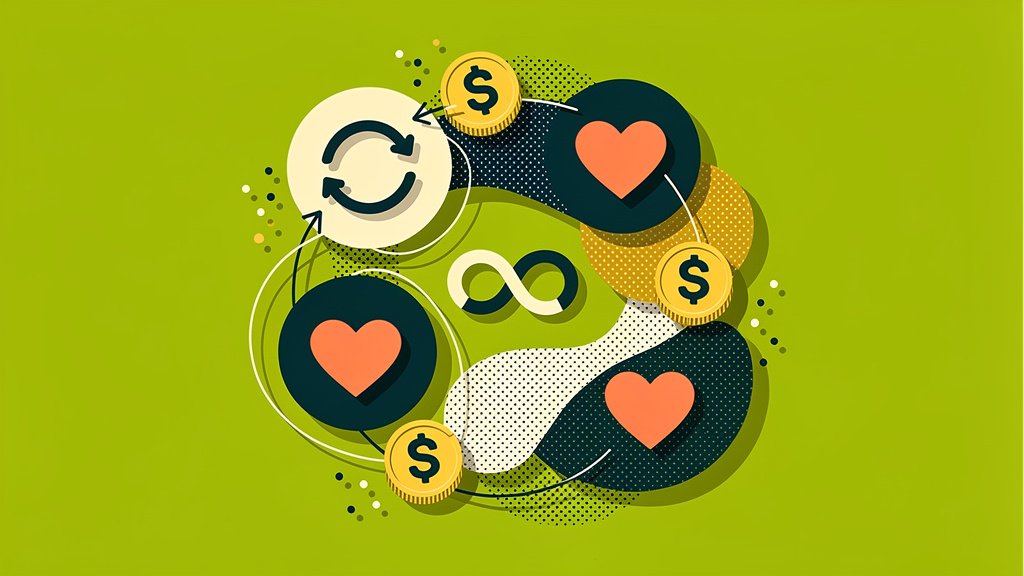
Looking to build a more reliable revenue stream for your nonprofit? Here’s the thing: while everyone’s chasing down big campaigns and flashy one-time gifts, there’s a quieter strategy that could transform your fundraising game. We’re talking about recurring donations, and honestly, we’ve found they might be the single most powerful tool in your fundraising toolkit.
In this piece, we’ll walk you through everything you need to launch a thriving monthly giving program. You’ll learn how to choose the right platform, set up your donation infrastructure, promote it effectively, and (this is the part organizations often miss) keep those donors engaged for years to come.
Why Recurring Donations Should Be Your Priority
Let’s be real: predictable income changes everything. When you can actually forecast your monthly revenue, suddenly you’re budgeting like a pro, planning programs that extend beyond next quarter, and spending way less time in that constant acquisition scramble.
And the numbers? They tell a pretty compelling story. Monthly givers contribute up to 42% more annually than one-time donors (Funraise). But here’s what really gets us: while many nonprofits watched their 2023 giving numbers drop, recurring revenue grew an impressive 134-154% across organizations of all sizes from 2018-2022 (Giving USA).
The retention stats are wild too:
- recurring donors stick around for an average of over eight years, compared to just 1.68 years for one-time donors (CharityEngine),
- retention rates for frequent givers hit 84% (CharityEngine),
- mid-level donors who’ve given 3-6 times show a 61.2% retention rate (CharityEngine).
Plus, monthly givers often become your strongest advocates. They’re out there promoting your cause, deepening their emotional connection to your mission, basically doing unpaid marketing work because they genuinely care.
ProTip: Start by auditing your current donor base. Target lapsed donors and those who’ve contributed 3-6 times. They’re already demonstrating commitment and represent your best conversion opportunities.
Common Challenges We See Daily
Before nonprofits switch to comprehensive platforms, we regularly encounter these recurring donation struggles. (Look, we’re not judging. We’ve seen brilliant organizations trip over these same hurdles.)
The “set it and forget it” disaster: Organizations launch with enthusiasm, then fail to assign ownership. Six months later, nobody knows how many sustainers they have, failed payments pile up unaddressed, and donors quietly churn away. Without dedicated oversight, even the best programs collapse.
The technical headache: Picture this. A mid-sized nonprofit cobbles together separate tools for forms, email, and payment processing. When credit cards expire, there’s no automated update process. Donors who want to change their gift amount have to call during business hours. The friction creates unnecessary donor loss, and everyone’s frustrated.
The stewardship gap: Monthly donors receive the same generic thank-you as one-time givers, then crickets for months. These sustainers deserve recognition for their ongoing commitment, but without segmented communication strategies, they feel invisible despite being your most valuable supporters.
Choosing Your Recurring Donation Platform
The platform you select will make or break your program’s success. You’ll want robust recurring features including automated billing, donor portals for self-service updates, and seamless CRM integrations.
| Platform | Key Recurring Strength | Payment Options | Best For |
|---|---|---|---|
| Funraise | Automated monthly gifts, customizable donor portals, AI-powered insights | Credit, ACH, PayPal | Building comprehensive sustainers societies |
| Donorbox | Strong monthly options, text-to-give | Credit, ACH | Organizations prioritizing recurring powerhouse features |
| Givebutter | Predictable cash flow tools | Multiple options | Small to mid-sized nonprofits |
| Kindful | Reports showing 5x higher gifts from recurring donors | Credit, bank draft | Retention-focused organizations |
Here’s a tip that’ll save you headaches: offer ACH (bank draft) alongside credit cards. It significantly cuts churn since bank account information doesn’t expire like credit cards do (Funraise). This simple option can dramatically improve your retention rates.
If you’re just starting out, platforms like Funraise offer free tiers that let you test recurring donation features with no commitment. Zero barrier to entry, maximum potential upside.
Step-by-Step Setup Guide
Step 1: Assign dedicated ownership. Appoint someone to actually manage your recurring giving program. This person oversees donor communications, monitors failed payments, and tracks growth metrics. No ownership equals no accountability equals program failure.
Step 2: Brand your program with purpose. Generic “monthly giving” lacks emotional resonance. Create a mission-aligned name like “Legacy Leaders,” “Circle of Hope,” or “Sustainers Society” that builds community and pride among members. Make people want to be part of something bigger.
Step 3: Build a compelling landing page. Design a mobile-responsive page dedicated to your recurring program. Include emotional storytelling, specific impact examples, and clear calls to action. Show exactly what monthly gifts accomplish, not just vague promises.
ProTip: Use impact previews on your forms. Show donors that “$25/month provides school supplies for two children year-round” rather than just listing dollar amounts. Specificity sells.
Step 4: Customize your donation forms strategically. Default to monthly giving as the pre-selected option. (Yeah, we said it. Make one-time the alternate choice.) Offer suggested amounts like $10, $25, and $50 that align with specific program costs. Include custom questions about how donors want their gifts allocated, turning monthly supporters into targeted funders.
Step 5: Integrate flexible payment options. Enable credit cards, ACH, and PayPal to accommodate donor preferences. Set multiple interval options, though monthly is preferred by 94% of recurring donors (360MatchPro). Make the process as frictionless as possible, because every extra click costs you conversions.
Step 6: Soft-launch for feedback. Test your program with board members and volunteers first. Gather testimonials and iron out technical issues before your public launch. Better to embarrass yourself in front of insiders than lose actual donor prospects to broken links.
AI Prompt for Your Recurring Donation Strategy
Want personalized help developing your recurring donation program? Copy and paste this prompt into ChatGPT, Claude, Gemini, or Perplexity:
I'm setting up a recurring donation program for [YOUR ORGANIZATION TYPE, e.g., 'an animal rescue nonprofit']. Our typical donor gives [AVERAGE GIFT AMOUNT] and our mission is [BRIEF MISSION STATEMENT]. We currently have [NUMBER] active donors.

Create a 90-day launch plan that includes: 1) A compelling name for our monthly giving program, 2) Three suggested monthly giving levels with impact descriptions, 3) An email sequence to convert existing donors, and 4) Stewardship touchpoints for the first year of a donor's recurring journey.
While AI tools provide excellent strategic frameworks, platforms like Funraise integrate AI components directly where you work, providing contextual suggestions based on your actual donor data and campaign performance. This operational context makes recommendations immediately actionable rather than theoretical.
Promotion Strategies That Convert
Diversify your channels to reach donors where they’re most engaged. Interesting trend alert: 57% of donors now enroll in recurring programs, up 46% year-over-year (360MatchPro). So yeah, people actually want this option.
Email campaigns deliver exceptional ROI when personalized. Use messaging like “Your monthly gift keeps [specific impact] going strong” rather than generic appeals. Segment your list to target one-time donors who’ve given multiple times. They’re already warm, just give them a nudge.
Social media storytelling connects emotionally. Share specific examples: “One $30 monthly gift provides clean water access for a family for life.” Video testimonials from existing monthly donors prove particularly powerful. Real people, real stories, real impact.
Event promotion and direct mail still work. (Yes, even in 2024. We know, we were surprised too.) Include monthly giving checkboxes on all print materials and dedicate time at galas to explain your sustainers program.
“Monthly donors are the backbone of sustainable nonprofit revenue. Their predictable giving allows organizations to plan strategically rather than constantly chase the next donation.”
Funraise CEO Justin Wheeler
Gamify the experience with recognition levels. Offer Bronze, Silver, and Gold tiers with corresponding perks like exclusive updates or VIP event access after 9-12 months of giving. This approach taps into donor psychology while building community. (And look, maybe it’s a li’l cheesy, but it works.)
Upsell immediately after one-time gifts. A post-donation pop-up asking “Want to double your impact with a monthly gift?” converts warm donors at their moment of highest engagement. Strike while the emotional iron is hot.
Leverage GivingTuesday strategically. Organizations promoting recurring options on GivingTuesday saw monthly donors’ share double to 6.23% by 2024 (Zeffy). Turns out people are thinking bigger picture even on hype days.
Stewardship That Builds Lifetime Value
Acquiring a monthly donor is just the beginning. Your retention strategy determines whether they give for eight months or eight years.
Send quarterly impact reports that connect their specific gift to outcomes: “Your $20/month fed 10 families this quarter.” Personalization dramatically outperforms generic updates. Nobody wants to feel like donor number 4,392.
Celebrate milestones with anniversary emails, personalized video messages from leadership, or exclusive webinar invitations. Recognition reinforces their decision to give monthly and reminds them why they started.
ProTip: Create a private Facebook group or Slack channel exclusively for monthly donors. This fosters peer-to-peer advocacy and builds a community around your cause. Let your biggest fans find each other.
Offer meaningful perks beyond trinkets. (Please, no more branded pens.) Early access to events, behind-the-scenes tours, or branded merchandise that donors actually want strengthens emotional bonds. Think quality over quantity.
Monitor churn proactively. Provide donor portals where supporters can easily pause gifts, update payment methods, or adjust amounts. Survey preferences regularly. Failed payments should trigger immediate, friendly outreach. Don’t let technical issues kill good relationships.
Frequent communication with high-value donors drives upgrades. Segment your sustainers and personalize outreach based on giving level and interests. You’re building relationships, not running a transactional vending machine.
Measuring Success and Optimizing Performance
Track these key metrics monthly to refine your program:
- acquisition rate: percentage of new donors choosing monthly giving,
- retention rate: aim for 80%+ in year one,
- lifetime value: recurring donors typically give 5x more over time (Kindful),
- revenue growth: compare to the 134%+ growth benchmark for small nonprofits,
- average gift size: monitor trends and test suggested amounts,
- churn rate: identify patterns in failed payments and cancellations.
Platforms with real-time dashboards make monitoring effortless. Funraise’s analytics show exactly where donors drop off in your forms and which communication triggers upgrades, allowing data-driven optimization instead of guesswork.
Test continuously. Experiment with suggested amounts, form designs, and email subject lines. Small improvements compound over time into significant revenue increases. We’re talking incremental gains that add up to transformative results.
Building Your Sustainable Future
So here’s where we’re at. Recurring donations transform nonprofit fundraising from a constant scramble into a strategic, sustainable operation. The setup requires intentional planning and the right technology, but the payoff in predictable revenue, deeper relationships, and long-term stability makes it essential for modern organizations.
Start small if needed. Even converting 5% of your current donors to monthly giving creates meaningful momentum. As your program matures, you’ll wonder how you ever managed without this reliable revenue stream. (We’ve heard this from basically every organization that’s made the leap.)
Look, the best time to launch your recurring donation program was last year. The second-best time is today. With free platforms like Funraise available to get started, there’s zero barrier to building the sustainable funding your mission deserves. So what’re you waiting for?
About the Author

Capital campaign pledge card: what to include so five-year pledges actually get paid
A five-year pledge is basically a promise stretched across sixty months of life. Kids graduate, budgets shift, priorities change, and somewhere in there, a commitment that felt rock-solid on signing day can start to wobble. If your capital campaign pledge card is just a name, a dollar amount, and a signature line, you're leaving way…

Capital campaign feasibility study: what it tests, who to interview and when you can skip it
Before you announce a $2 million building fund or float the idea of a $10 million endowment push, there's really one question that matters: will anyone actually give? A capital campaign feasibility study is how you find out, before you spend down donor goodwill and political capital on a campaign that wasn't quite ready for…
Endowment fundraising: how to ask for gifts that pay your nonprofit forever
Most of the asks you make this year fund… well, this year. Endowment asks are different animals entirely: they fund every year after that, forever. And that one distinction changes pretty much everything, how you frame the conversation, who gets invited into it, and what you're actually promising in return. If you're a nonprofit leader…