Donor-advised funds are having a moment, but here’s the thing: most donation pages haven’t gotten the memo. Walk through a typical giving form and you’ll find credit card, ACH, maybe PayPal… and that’s it. If you’re a donor sitting on a DAF, you’re basically told to “figure it out later.” Spoiler: later often means never.
So in this piece, we’re digging into why that gap matters more than most fundraising teams realize, what’s actually happening in donor behavior that makes DAF givers different, and how something as simple as a DAF button on your form can close a revenue gap you probably didn’t know you had. Let’s get into it.
DAFs Aren’t a Niche Giving Channel Anymore
There are roughly 3.6 million DAF accounts in the U.S. right now, sitting on more than $326 billion earmarked for charity (FreeWill 2026 Report; DAF Research Collaborative). That’s not pocket change. DAFs now make up 12-15% of all U.S. charitable giving, and 79% of nonprofits say they’ve received a DAF gift, which makes it the most common non-cash gift type organizations see today (FreeWill 2026 Report).
In the most recent giving cycle, donors poured about $90.6 billion into DAFs and granted roughly $64.6 billion back out to nonprofits (DAF Research Collaborative). And that grantmaking number keeps climbing. So if your donation page isn’t clearly inviting DAF gifts, you’re not missing some small niche crowd, you’re leaking a double-digit slice of individual giving. That’s worth sitting with for a second.
Protip: pull your last 12 months of check and offline DAF grants from your CRM. That number’s a rough proxy for how much DAF revenue is currently sailing right past your online form.
Why Your Standard Form Doesn’t Fit DAF Donor Behavior
Here’s something worth knowing: DAF donors don’t think like your typical online giver. They think in grants, not transactions, because the money’s already set aside and the tax deduction’s already been claimed. That mental shift changes everything about how they expect to give.
A few numbers make the case pretty clearly:
- the median DAF gift is 12x larger than the median non-DAF gift (2026 DAF Fundraising Report, Candid),
- average DAF grants at major sponsors run around $4,600+, compared to an average online credit card gift near $200 (Chariot),
- DAF donors retain at 59%, roughly 13 points higher than non-DAF donors (2026 DAF Fundraising Report, Candid).
So when these donors land on a form that only takes credit cards, they don’t convert on the spot. They bookmark it, tell themselves they’ll “log into Fidelity later,” and often just… don’t come back. Meanwhile your smaller donors zip through checkout in seconds flat. It’s a weirdly inverted funnel: the easiest path on your site is reserved for the smallest gifts.
The Everyday DAF Struggles We See Constantly
We work with nonprofit teams day to day, and honestly, the same patterns show up again and again before anyone fixes their DAF experience:
- the “buried link” problem: a DAF mention technically exists, but it’s a static PDF link tucked under “Other Ways to Give,” three clicks away from the actual form,
- the disappearing donor: a major donor emails saying they “meant to send a DAF grant last quarter,” and the gift officer has zero idea if or when it ever showed up,
- the attribution black hole: DAF grants arrive as anonymous checks in the mail, no campaign tag, no online record, no way to thank the donor while it’s still relevant,
- the year-end scramble: development staff spend December manually chasing DAF sponsors because there was never a self-serve option on the site to begin with.
Sound familiar? You’re not alone, and the good news is, it’s fixable with the right form setup.
How a DAF Button Actually Captures the Gift
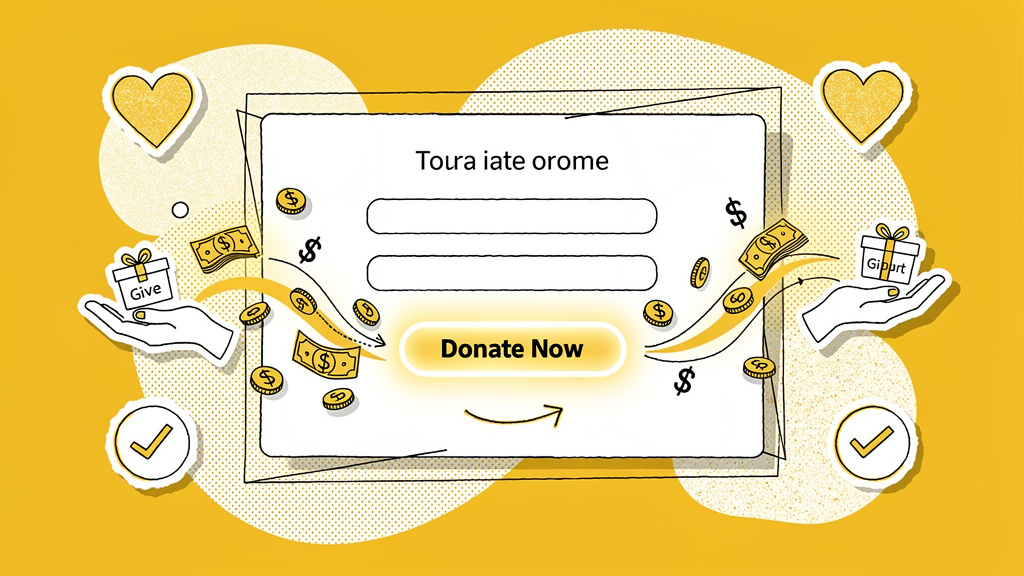
A DAF button on your primary donation form folds the grant recommendation process right into your existing giving flow, so donors never have to leave your site to “deal with it later.” Using Funraise’s integration with DAFpay by Chariot as a working example: DAFpay shows up as a payment option right alongside credit card and ACH. When a donor picks “Donor-Advised Fund,” a secure overlay lets them search their provider (DAFpay connects to 1,100+ U.S. DAF sponsors), log in with credentials they already have, and recommend a grant in as few as three clicks.
The donor never leaves your branded environment. Once the grant’s submitted, they land back on your confirmation page, and behind the scenes, the gift gets tracked in your CRM under a clean “Donor Advised Fund” payment method, just like any other transaction.
“Donors don’t abandon your mission when they hit friction, they abandon your form. A DAF button removes the single biggest reason a high-capacity gift never makes it out of someone’s fund and into your budget.”
Funraise CEO Justin Wheeler
Try This Prompt With Your AI Tool
Want to turn all this into an actual plan for your org? Copy the prompt below into ChatGPT, Claude, Gemini, or whatever AI assistant you’ve got open right now:
I run fundraising for [organization name], a nonprofit focused on [mission area]. Our current donation page only accepts [current payment methods]. Draft a short plan for adding a donor-advised fund giving option, including placement on the page, donor-facing copy, and one email to send to our top [donor segment] announcing the new option.Protip: when you’re doing this kind of work day to day, look for fundraising software with AI built directly into the platform where you’re already managing donors and forms, like Funraise, rather than bouncing to a separate tab. Having full operational context in one place just makes the recommendations more useful.
The Conversion Math Behind a DAF Button
Funraise giving pages convert 17% of visitors, more than double the nonprofit benchmark of 8% (Funraise Growth Stats 2025). On mobile, that climbs to 19.8%, about 2.4x the mobile benchmark. And the average one-time gift processed through Funraise in 2025 was $281, more than double the industry benchmark of $139.
Now layer DAF behavior on top of that conversion advantage:
| Metric | Standard Online Gift | Typical DAF Gift |
|---|---|---|
| Average size | ~$200-$281 | $4,600+ (Chariot) |
| Relative size | 1x | up to 12x median (Candid) |
| Donor retention | Baseline | +13 points (Candid) |
Capturing even a handful of DAF gifts through your form can equal dozens of standard online transactions. That math, by the way, is exactly why Funraise customers saw 26% average online revenue growth in 2025.
Where the Button Belongs and What It Should Say
Placement and copy decide whether donors ever even notice the option exists. A few things we’d recommend:
- keep it above the fold, right next to your legal name and EIN,
- add a plain, human sentence: “Have a donor-advised fund? Recommend a grant to [Org Name] in just a few clicks,”
- place the DAF option beside credit card and ACH, not buried underneath,
- use language donors actually understand: “Give from your Donor-Advised Fund” beats “process a DAF grant” every time.
Protip: try a short campaign email to your top 10-20% of lifetime donors announcing the new DAF option. This group tends to adopt fastest, so you’ll get real data quickly.
Segment, Steward, and Protect the Channel
Once DAF gifts start flowing through a tracked payment method, build a dedicated view of that segment: total DAF revenue, donor count, average gift size versus non-DAF gifts. Some organizations have watched DAF revenue climb to 24% of total revenue (Candid), and industry-wide, DAF share of total giving has risen from a median of 7% to 11%.
Look, not modernizing your form isn’t just a UX inconvenience anymore, it’s a growth risk. Contributions into DAFs rebounded 38.6% year-over-year, and nonprofits studied from 2022-2025 saw 75% median growth in DAF revenue, compared to just 12% growth in non-DAF revenue (Candid).
If you’re curious what a DAF button actually looks like on your own form, Funraise offers a free tier with no commitment, so you can try the experience firsthand before deciding whether a premium plan makes sense. Honestly, the gap between “we should probably add DAF giving” and a live button on your page is smaller than most teams think.
About the Author


CRM for nonprofit growth: when the spreadsheet stops working and what your first CRM must do
Every nonprofit starts somewhere small, scrappy, and powered by spreadsheets. That's not a knock on you. Spreadsheets are free, they're familiar, and honestly, they'll track your first hundred donors just fine. But growth has this funny way of exposing cracks in systems that used to feel bulletproof. If you're here because your team just spent…
How to increase recurring donations: 9 upgrade and win-back plays for existing sustainers
Most nonprofits spend their energy chasing the next new monthly donor. Makes sense, right? New donors feel like progress. But here's the thing: there's already a goldmine sitting quietly in your donor file, and it's the sustainers you've got right now. These are the people who already trust you, already believe in the mission, and…

Donor engagement scoring: how to rank supporters by behavior, not just gift size
If your "top donor" report is just a spreadsheet sorted by gift size, you're only seeing half the story. There's a whole layer of relationship happening underneath those numbers, event attendance, email opens, volunteer hours, the stuff that actually predicts whether someone sticks around. That's what donor engagement scoring is all about: ranking supporters by…