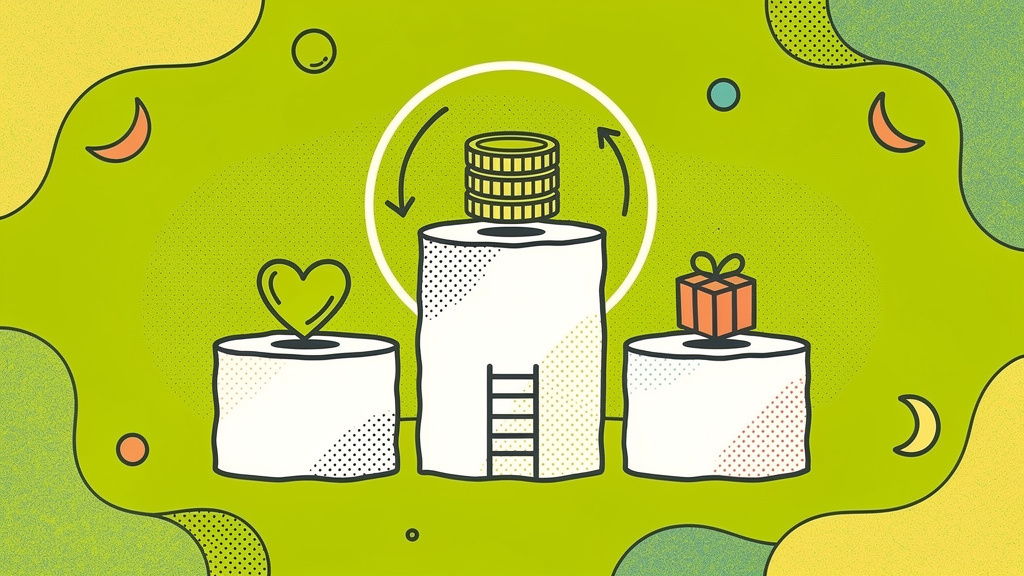
Look at any donation form and you’ll see the same setup: three or four suggested amounts sitting there, looking totally unremarkable. But here’s the thing, those little numbers are doing a lot more work than they let on. They quietly tell donors what “normal” giving looks like on your page, and whichever amount sits in the middle tends to become the default choice for a lot of people. Nail that middle number and you nudge folks toward giving more, no pressure required. Miss it, and you’re either leaving money on the table or scaring off someone who was ready to give their first gift.
So let’s dig into why that middle tier carries so much weight, and how to actually price your giving levels with intention instead of just picking numbers that feel round and tidy.
Why the Middle Option Quietly Runs the Show
Here’s something most donors don’t do: sit down and calculate the “right” amount from scratch. Instead, they anchor to whatever numbers are already in front of them and gravitate toward the option that feels safest, most socially acceptable. That’s the anchoring effect, and it’s especially powerful for first-time or one-time donors who have no giving history of their own to lean on.
Research summarized by NationBuilder found that when nonprofits offer multiple suggested amounts, donors typically anchor to the middle options. Think of it as the Goldilocks choice, not so low it feels stingy, not so high it feels reckless.
For context, Funraise’s own platform data shows the average one-time online gift in 2025 was $281 (Funraise Growth Stats). That’s a useful benchmark to keep in mind when you’re figuring out what a credible middle tier might look like for a general appeal.
Protip: don’t build your tiers so the lowest amount is secretly the one you’re hoping most people choose. Build the ladder so your middle option is the number you actually want to normalize.
The Behavioral Economics Hiding in Your Donation Form
Suggested amounts work because they cut down on friction. Instead of asking someone to invent a number out of thin air, you hand them a short, pre-approved menu. Three things are doing the heavy lifting here:
- anchoring: the first numbers a donor sees shape what feels reasonable,
- choice architecture: how you arrange the options changes decisions, even when the options themselves stay the same,
- the Goldilocks effect: people gravitate toward whatever feels “just right,” which is usually the middle one.
One fundraising study found that simply offering a list of suggested amounts, instead of a blank field, doubled donations compared to giving no list at all. That’s not clever copywriting, that’s structural design quietly doing the heavy lifting.
How Many Tiers Should You Actually Offer?
Across fundraising research, the consensus is pretty consistent: three to five suggested amounts, plus an “Other” field. Fewer feels restrictive. More creates decision fatigue. There’s a sweet spot, and it’s not that hard to find.
| Tier count | What it does | Best use case |
|---|---|---|
| 3 tiers | simplifies the decision, creates a strong anchor | mobile-first forms, general appeals |
| 4 tiers | adds flexibility without overwhelming | campaign landing pages, recurring gifts |
| 5 tiers | enough range for segmentation and larger gifts | mature programs, major campaign pages |
A well-optimized donation form isn’t just about the tiers, though, it’s part of a bigger experience. That’s exactly why tools like Funraise build suggested-amount logic directly into the donation form builder instead of treating it as an afterthought. Haven’t tried it? Funraise’s free tier is a pretty low-risk way to see how form structure affects average gift size firsthand.
The Struggles We See Every Week
If any of this sounds a little too familiar, you’re definitely not alone. These are patterns we hear constantly from nonprofit teams right before they finally rework their giving levels:
- the “round number” trap: a team sets tiers at $25/$50/$100/$500 because those numbers just feel tidy, with zero reference to what donors actually give, and the middle tier ends up wildly out of step with reality,
- the stale ladder: giving levels were set three years ago and never touched again, even as the average gift quietly grew, so now the “middle” option functions as the lowest realistic ask,
- the copy-paste ladder: an organization lifts another nonprofit’s tier structure straight off a webinar slide, without adjusting for their own donor base, cause, or geography,
- the “more is better” mistake: a well-meaning staffer adds seven suggested amounts to “give donors options,” which instead creates hesitation and abandoned forms.
The good news? Each of these is fixable with data you probably already have sitting in your CRM.
“The middle tier isn’t a math problem, it’s a mirror. It shows donors what you believe generosity looks like, so make sure it’s reflecting your actual mission, not just a round number.”
Funraise CEO Justin Wheeler
Pricing the Middle Tier With Actual Donor Data
Skip the guesswork. Pull your median gift, not just your average, especially if a handful of large gifts are skewing your numbers. Median is usually the cleaner signal for what “normal” actually looks like among your donor base.
A practical framework to work from:
- entry tier: accessible, not tiny,
- middle tier: your target, normalized ask,
- upper tier: a believable stretch, often roughly double the middle amount,
- top tier: a premium anchor for high-capacity donors.
If your average gift hovers around $10, don’t present a ladder that starts at $100. On the flip side, if your donor base tends to give at a much higher level, a $2 minimum will undercut your credibility rather than invite generosity.
Protip: segment your tiers by audience. First-time donors, annual fund donors, and monthly givers shouldn’t be looking at identical ladders. For a mid-level prospect upgrade ask, try something like their current gift times 1.25, 1.5, and 2.
Try This Prompt With Your Favorite AI Tool
Here’s a quick prompt you can copy, paste, and tweak in ChatGPT, Claude, Gemini, or Perplexity to get a starting point for your own giving levels:
I run a [type of nonprofit] and our median one-time gift is [$ amount]. Suggest a 4-tier donation ladder including a middle option designed to feel normal but slightly aspirational, plus one impact-based label for each tier tied to [specific program or outcome].Prompts like this are great for a first draft, but they work best when the AI actually has context on your donor data, not just a number you typed in manually. That’s part of the advantage of platforms like Funraise, which build AI-assisted suggestions right into the fundraising workflow using real donor history and behavior, not just a blank prompt box.
Make the Middle Tier Feel Worth Choosing
A strong middle option isn’t just a number, it’s a number with meaning behind it. Tie it to a specific outcome: “$100 feeds a family for a week” carries a lot more weight than “$100” sitting there alone. Consider mission-based labels like Supporter, Builder, or Champion instead of plain dollar amounts. Identity-based framing can make a donor feel like they’re joining something, not just paying for something.
Protip: if your middle tier feels weak, don’t just bump the number up. Strengthen the impact language first. A clear outcome often makes a higher ask feel justified on its own.
Treat Your Tiers Like a Living Experiment
Donation tiers should never be a “set it and forget it” decision. Research on default amounts found that smart nudges increased donations significantly in some campaigns, but poorly calibrated defaults can backfire, lowering donor intent when people feel manipulated rather than gently guided.
Test one variable at a time: the middle amount, the number of tiers, whether one is preselected, or whether labels are impact-based versus dollar-based. Keep everything else on the form stable so you actually know what moved the needle.
Protip: review your tier performance quarterly, not annually. Donor behavior shifts faster than most giving pages ever get updated.
About the Author


Donor management software comparison for major gift teams: moves, pledges and capacity tracking
Major gift fundraising isn't really a spreadsheet problem, even though most software gets evaluated like it is. It's a relationship problem. It's a math problem. And honestly? It's a prioritization problem too, all rolled into one messy job. So when nonprofits pick donor management software the same way they'd pick an email tool, checking only…

What major donors want: 10 things they expect before, during and after the gift
Major donors don't just wire money because they're feeling generous that day. They're making strategic bets on your mission, and honestly, they're sizing you up at three different moments: before they say yes, during the actual gift conversation, and after the money lands. Get a handle on what they're expecting at each stage, and you…
Gift range chart: how to build one and why the top 10 gifts carry 60% of your goal
If you've ever stared down a $1,000,000 campaign goal and felt your stomach drop a little, you're not alone. Big round numbers have a way of freezing us up. That's exactly the problem a gift range chart solves. It takes that scary number and breaks it into bite-sized, donor-shaped pieces, and along the way it…