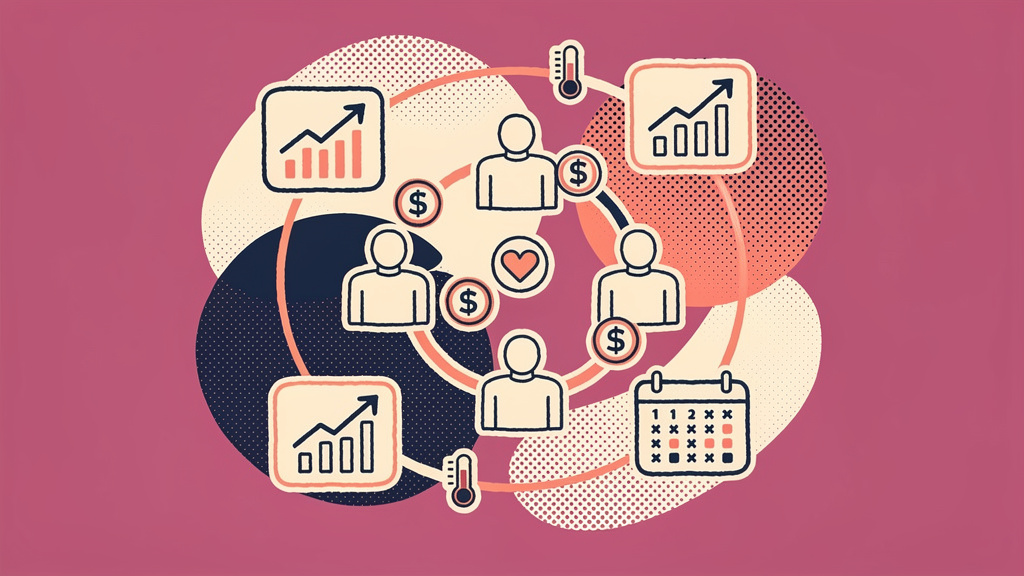
Peer-to-peer fundraising has this quiet superpower that a lot of nonprofits underestimate: it turns your most passionate supporters into fundraisers, and those fundraisers into community builders. And when you zoom out and look at what the data is telling us heading into 2026, the picture is genuinely exciting. Not in a hype-y, everything-is-amazing way, but in a we-can-actually-plan-for-this way.
So that’s exactly what we’re going to do here. We’ll walk through the latest P2P benchmarks together, figure out what they mean for your strategy, and flag the common pitfalls that quietly sink campaigns before they hit their stride. By the end, you’ll have a clearer sense of where to focus your energy and what good actually looks like.
The Market Is Steady and That’s Actually Great News
The top 30 U.S. peer-to-peer fundraising programs raised $1.17 billion in 2025, a 3.4% year-over-year increase (Peer to Peer Forum). Participation reached 2.63 million, up 3.6%, with 23 out of 30 programs showing revenue growth (Peer to Peer Forum).
The post-pandemic spikes are behind us, and honestly? That’s a good thing. We’re entering a maturation phase now: predictable, benchmarkable, and actually plannable. For nonprofits, this is ideal territory. You can model realistic growth targets, build multi-year retention strategies, and invest in infrastructure without crossing your fingers.
Health-focused causes continue to lead the field. Twenty-eight of the top 30 programs serve health missions, with the American Heart Association’s Heart Walk topping the list at $121 million, an $11 million year-over-year gain (Peer to Peer Forum). The Cleveland Clinic’s VeloSano entered the Top 30 at number 30 with $14.5 million (Peer to Peer Forum), which sets a pretty useful entry benchmark for organizations with regional ambitions.
Protip: If your P2P program is growing 3-5% annually with stable or rising participation, you’re tracking in line with the top performers in the country.
Who’s Moving the Needle and Why
Here’s a snapshot of standout programs driving 2026 planning insights:
| Organization | Event | 2025 Revenue | Notable Metric |
|---|---|---|---|
| American Heart Association | Heart Walk | $121M | +$11M YoY (Peer to Peer Forum) |
| American Cancer Society | Making Strides Against Breast Cancer | N/A | +68,823 participants, 931K total (Peer to Peer Forum) |
| Cleveland Clinic | VeloSano | $14.5M | New Top 30 entry (Peer to Peer Forum) |
| ALSAC/St. Jude | PLAY LIVE | N/A | Returned to Top 30 (Peer to Peer Forum) |
Cycle for Survival grew participation 13% to 26,000 participants (Peer to Peer Forum). ALSAC/St. Jude and Blood Cancer United each ran three programs in the Top 30 (Peer to Peer Forum), which points to a multi-program portfolio strategy worth studying if you haven’t already.
The throughline across top performers is a hybrid model: in-person community energy paired with digital amplification. Programs that lean into both channels consistently outperform single-format campaigns. It’s not revolutionary advice, but the data keeps confirming it.
Protip: Don’t wait for your flagship fall event to test hybrid formats. Run a small-scale pilot in Q1 2026, a local walk paired with a digital fundraising page sprint. Use it to calibrate your technology stack and train staff before peak season hits.
The Real ROI Story: What Good Looks Like
| Metric | Industry Average | Funraise Platform Data | Source |
|---|---|---|---|
| Average raised per fundraiser | ~$610 | $1,220 (2x industry) | Funraise; Peer to Peer Forum |
| Loyal fundraiser average (5+ years) | $4,425 | N/A | Peer to Peer Forum |
| Recurring revenue growth | N/A | 52% annually | Funraise |
| Donation form conversion rate | N/A | 50% | Funraise |
Here’s the metric that doesn’t get enough airtime: a single engaged P2P fundraiser is functionally equivalent to roughly 10 one-time donors when you account for average gift sizes (Funraise). That reframes how you should be thinking about acquisition costs and how much it’s worth investing in retention.
Repeat participants raise 18% more annually, and loyal participants who have been around five or more years average $4,425 raised (Peer to Peer Forum). Your longest-tenured fundraisers aren’t just your best performers, they’re your most defensible revenue. Protecting that cohort deserves its own strategy, not just an afterthought in your annual plan.
Try This AI Prompt for Your 2026 P2P Planning
Planning your P2P strategy doesn’t have to start from a blank page. Copy and paste this into your preferred AI tool, whether that’s ChatGPT, Gemini, Claude, or Perplexity, and swap in your own variables:
You are a nonprofit fundraising strategist. Help me build a peer-to-peer fundraising plan for [ORGANIZATION NAME], a [MISSION/CAUSE TYPE] nonprofit. Our 2025 P2P revenue was [REVENUE AMOUNT] with [NUMBER OF PARTICIPANTS] participants. Based on current trends in peer-to-peer fundraising, suggest three specific strategies to grow participation and average fundraiser revenue in 2026, including one digital-first tactic and one retention-focused approach. Format the output as a prioritized action plan.That said, prompts like this work best when there’s clean, real data behind them. That’s where platforms like Funraise genuinely shine: AI capabilities are built directly into the platform where your campaigns actually live, so every recommendation has the full operational context it needs. Worth a look at funraise.org, and yes, there’s a free tier with no commitment required.
Participation Trends Your 2026 Strategy Can’t Ignore
Digital-first P2P fundraising surged 30% in revenue to $154.9 million in a prior benchmark study, with participation jumping 132% (Kindsight). Mobile now drives more than 50% of P2P campaign traffic (Peer to Peer Forum), and social platforms aren’t optional amplification channels anymore. They’re where new donors first discover a fundraiser’s page in the first place.
The average P2P fundraising page draws 8 donors (Funraise). That’s your baseline network effect unit. Multiply it across your whole fundraiser base and you’ll quickly see why participant acquisition has compounding returns that direct mail simply can’t replicate.
“The most successful P2P programs aren’t just raising money. They’re building communities of advocates who carry the mission forward long after the event ends.”
Funraise CEO Justin Wheeler
Protip: Segment your returning participants and send them personalized video appeals before registration opens. In our experience, this approach can lift funds raised by 150% compared to generic email outreach (Funraise). Worth the extra effort, we promise.
Common P2P Failures We See Every Day
Okay, this section might sting a little. But it’s based on what we genuinely see nonprofits navigating, sometimes before and sometimes after switching platforms. We’re sharing it because we’ve been in these conversations and the patterns are consistent.
“We set up the fundraising page and waited.” The page goes live, an email goes out, and then silence. P2P doesn’t run itself. Without a structured participant coaching sequence, even the most motivated fundraisers go quiet after week one.
“Our registration-to-active-fundraiser conversion is terrible.” A lot of organizations count registrants as participants, but a significant chunk never set up their personal page or raise a single dollar. If you’re not tracking that gap, your headline numbers are quietly masking a retention problem.
“We only run P2P in October.” Single-event P2P leaves revenue on the table for 11 months of the year. Year-round P2P models generate steady, predictable revenue that isn’t dependent on one weather event or a scheduling conflict. It’s an approach Funraise advocates for specifically, and the results back it up (Funraise).
Building Your 2026 P2P Blueprint
Here’s how the data translates into concrete moves you can actually make:
- set a growth target anchored in benchmarks – three to five percent aligns with Top 30 trends (Peer to Peer Forum). Stretch goals should be tied to specific tactical investments, not wishful thinking,
- diversify your P2P format portfolio – walks, cycles, digital-only, and micro-events each attract different audiences and carry different cost structures. Top organizations run multiple formats (Peer to Peer Forum),
- invest in your technology foundation – donation forms converting at 50% aren’t a luxury. They’re the difference between a campaign that compounds and one that leaks revenue at every step (Funraise),
- build a retention program, not just an acquisition program – your five-year fundraisers are averaging $4,425 (Peer to Peer Forum). That cohort deserves a dedicated strategy.
Platforms like Funraise were built for exactly this kind of comprehensive P2P management, from high-conversion forms to AI-powered personalization to year-round campaign infrastructure. If you haven’t explored it yet, the free plan is a genuinely low-risk way to see how all of this data translates into actual campaign performance.
The 2026 P2P opportunity is real. The organizations that capture it are already planning with precision, not just passion.
About the Author


Arts fundraising strategy: how to grow individual giving when ticket revenue plateaus
Here's a scene every performing arts director knows by heart: attendance settles into a comfortable plateau, subscriptions stop climbing, and the box office just can't keep pace with production costs that keep creeping up. Sound familiar? You're not alone, and, more importantly, you're not stuck. Here's the thing though, that plateau might actually be good…
Fundraising ideas for seniors: 15 formats for your most generous age bracket
If you're building a donor strategy and wondering where to put your energy, look no further than the folks who've been showing up for decades. Older adults aren't some niche audience you check in on once a year, they're the foundation a lot of American giving is built on. We're talking major generosity, remarkable consistency,…

Best Event Fundraising and Ticketing Software for Nonprofits: Which Platforms Lift Revenue Per Guest
Gross revenue hides the real story. Here is which nonprofit event software is built to increase what each attendee gives, not just collect the ticket price.