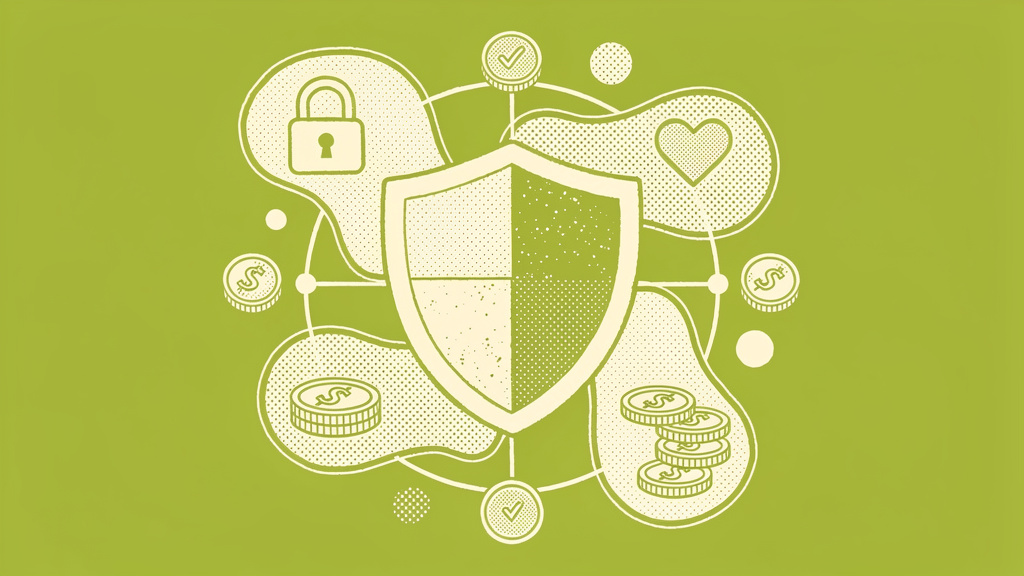
Donor trust isn’t just a warm, fuzzy concept. It’s the actual engine behind sustainable fundraising, and it’s more fragile than most nonprofit leaders realize. One data breach, one fraud incident tied to your donation page, and that trust can evaporate faster than your year-end giving surge. The good news is that protecting it doesn’t have to feel like a second job, as long as you know what you’re working with.
So that’s exactly what we’re going to dig into here. We’ll walk through the real threat landscape nonprofits face, break down what PCI compliance actually means for your org, and lay out the practical security stack that keeps donor data safe and fundraising sustainable. By the end, you’ll have a clear picture of where your risks are and what to do about them.
The Threat Landscape Is Real and Growing
The numbers are hard to ignore. In 2025, 34% of charities reported fraud or attempted fraud, with 38% of those incidents perpetrated by insiders and only 32% of organizations recovering their losses (fplglaw.com). Meanwhile, 10% of all occupational fraud hits nonprofits, with median losses reaching $76,000, climbing to $85,000 for social services organizations (pbmares.com).
What makes nonprofits uniquely vulnerable? Well, you process sensitive cardholder data without ever exchanging physical goods, which makes your donation forms attractive targets for carding fraud, where automated bots test stolen card numbers through public-facing forms. External phishing attacks pile on top of that: one in three untrained employees falls for phishing attempts (pbmares.com). And honestly, most nonprofits aren’t exactly running a dedicated cybersecurity team.
Here’s the thing though, proactive, layered security genuinely works. Funraise reported a 90% reduction in carding attacks after deploying multi-layer protective tools in mid-2025 (funraise.org). So this isn’t just a theoretical exercise.
PCI DSS: What Nonprofits Actually Need to Know
PCI DSS, short for Payment Card Industry Data Security Standard, is the compliance framework governing how organizations handle cardholder data. Most nonprofits qualify for SAQ A, the simplest self-assessment questionnaire, if they fully outsource payment processing to compliant vendors and never store or transmit card data on their own systems.
Here’s how compliance levels map to your organization:
| PCI Level | Transaction Volume | Requirements | Nonprofit Fit |
|---|---|---|---|
| Level 1 | >6M/year | Full QSA audit | Platforms like Funraise |
| Level 2 | 1-6M/year | SAQ + scan | Mid-size orgs |
| Level 3 | 20K-1M e-comm | SAQ + scan | Online-heavy orgs |
| Level 4 | <20K e-comm | SAQ | Small/low-volume |
PCI DSS 4.0.1 became effective in March 2025 (fundraiseup.com), introducing stricter controls around authentication and web-based threats. If you haven’t reviewed your compliance posture this year, now’s a good time to do that.
One practical move worth making: use hosted payment forms delivered via JavaScript iframes from your payment vendor. This keeps card data entirely off your servers and dramatically simplifies your annual SAQ A filing. Your processor carries the compliance burden, not you.
The Core Security Stack: What You Should Have in Place
Effective nonprofit payment security isn’t a single tool. It’s a layered architecture, and in our experience, the organizations that get into trouble are usually the ones treating it as a checklist rather than an ongoing system. Let’s explore what that stack actually looks like in practice.
Encryption and Tokenization
End-to-end encryption (E2EE) protects data from the moment a donor submits their payment. Tokenization then replaces raw card details with a surrogate value post-processing, so even if data is intercepted, it’s essentially useless (nonprofitpro.com). Think of it as a decoy, except it actually works.
Hosted Payment Forms
Keeping card data off your servers via PCI Level 1 gateways like Stripe or Authorize.Net eliminates your largest attack surface entirely. This is one of those changes that sounds technical but makes an enormous practical difference.
Real-Time Fraud Detection
AI-based scoring tools like Stripe Radar analyze transaction signals in real time. Pair that with AVS (Address Verification Service) and CVV checks, and you’ve got a solid first line of defense against suspicious patterns before they become chargebacks.
Web Application Firewalls and reCAPTCHA
WAFs filter out bots, SQL injection attempts, and cross-site scripting attacks. Dynamic reCAPTCHA, deployed selectively on suspicious traffic rather than every submission, reduces friction for legitimate donors while blocking automated abuse. That distinction matters more than it sounds.
Funraise’s security stack layers rate limiting, IP bans, human monitoring, and AWS Shield DDoS protection, which is a solid benchmark to hold your current setup against (funraise.org/about/security).
When Things Go Wrong: Real Scenarios We See Every Day
Before organizations implement proper controls, we consistently see a few painful patterns play out. These aren’t edge cases or horror stories pulled from some distant headline. They’re the daily reality of nonprofit operations without purpose-built financial infrastructure.
The Carding Spike Nobody Noticed. A nonprofit’s donation form gets hit overnight by bots testing hundreds of stolen cards. The first sign? A spike in failed transaction fees and a frantic call from their payment processor threatening account suspension. No WAF, no rate limiting, no monitoring in place.
The Insider Incident. A long-tenured staff member with broad system access quietly redirects a vendor payment. No MFA, no separation of duties, no documented data-sharing policy. The organization recovers nothing.
The “We’ll Do It Later” Compliance Gap. An organization using a patchwork of tools, a form builder, a CRM, a separate processor, discovers during a donor audit that card data was being logged in a spreadsheet. Their SAQ A status was invalid from the start.
If any of these sound uncomfortably familiar, it may be worth exploring what a unified platform like Funraise can do. You can start for free, with no commitments, and see the difference right away.
Your AI Prompt for Payment Security Planning
Ready to put AI to work for your nonprofit’s payment security strategy? Copy the prompt below and paste it into whatever AI tool you use daily, whether that’s ChatGPT, Gemini, Claude, Perplexity, or something else entirely.
I'm the [YOUR ROLE] at a nonprofit organization called [ORGANIZATION NAME]. We currently process donations primarily through [PAYMENT METHODS, e.g., online credit card, ACH, mobile giving]. Our approximate annual transaction volume is [TRANSACTION VOLUME, e.g., under 20,000 / 20K-1M / over 1M]. Please help me create a practical payment security checklist tailored to our size and transaction type, including PCI DSS compliance steps, fraud prevention priorities, staff training recommendations, and the top three risks we should address first based on our profile.That said, while AI tools are great for strategic thinking, in day-to-day nonprofit operations it’s worth using platforms like Funraise that have AI components built directly into the workflow. That way you get full operational context rather than having to re-explain your situation from scratch every single time.
Choosing the Right Payment Processor
Not all processors are created equal when it comes to nonprofit-specific fraud protection. Here’s a quick comparison of leading options:
| Processor | Key Security Features | Best For |
|---|---|---|
| Funraise | WAF, 90% carding reduction, PCI Level 1 | Nonprofits, peer-to-peer fundraising |
| Stripe | Radar AI fraud scoring, tokenization, PCI Level 1 | Integrations, scalability |
| Authorize.Net | Advanced fraud filters, CVV/AVS | High-security environments |
| PayPal | PCI compliant, no setup fees | Small or new organizations |
One thing we’ve found really useful: run a low-volume pilot before committing to any processor. Monitor declined transactions weekly during the first 30 days and fine-tune your AVS/CVV sensitivity. Too strict and you’ll accidentally reject legitimate donors; too loose and you’re rolling out the welcome mat for fraud.
Stopping Carding Fraud Before It Starts
Carding attacks are usually pretty identifiable once you know what to look for: sudden surges of hundreds of small or $1 test transactions within a single hour. Bots exploit frictionless forms, which is exactly why friction needs to be smart, not blanket.
One underused tactic worth knowing about is the honeypot field. These are hidden form elements that real users never see or interact with, but bots do. Any submission with a completed honeypot field gets blocked automatically. Paired with a WAF that detects XSS and SQL injection fingerprints, this approach significantly reduces automated abuse without degrading the donor experience (funraise.org). It’s a small tweak with a disproportionately large payoff.
Staff, Policies, and the Insider Threat
Technology alone won’t protect you. Because 38% of charity fraud is committed by insiders (fplglaw.com), your human layer matters just as much as your technical one. And this is the part that sometimes gets skipped because it feels less exciting than deploying a new security tool.
Here’s a minimum baseline every nonprofit should have in place:
- multi-factor authentication (MFA) on all financial and donor systems,
- annual cybersecurity drills that include phishing simulations,
- documented data-sharing policies (notably, 68% of nonprofits currently lack them (pbmares.com)),
- vendor fraud checks to catch fake invoice schemes before funds transfer.
Internally, Funraise enforces OWASP secure coding standards, annual penetration testing, and GPG encryption across its systems (funraise.org/about/security). Plus, integrating your transaction logs with your CRM so that anomalies trigger automatic alerts is genuinely worth the setup effort. Review flagged activity monthly and you’ll stay well ahead of chargebacks.
“The nonprofits that will thrive long-term aren’t just the ones raising the most money, they’re the ones donors trust the most with their data.”
Funraise CEO Justin Wheeler
Your Security Compliance Checklist
Let’s bring this home with something actionable. Here’s where to start:
- determine your PCI SAQ type based on annual transaction volume,
- confirm all payment vendors hold PCI Level 1 and SOC 2 certifications,
- audit all donation forms to ensure no direct card data handling occurs on your servers,
- train staff quarterly on phishing recognition and insider fraud risks,
- monitor failed transaction spikes daily,
- run annual penetration tests and vulnerability scans.
Payment security isn’t a one-time project. It’s an ongoing operational discipline, and the right platform makes that discipline manageable rather than overwhelming. If you’re not sure where your current stack stands, Funraise offers a free starting point with enterprise-grade security baked in from day one. No commitment required to see what secure, purpose-built nonprofit payment processing actually looks like.
About the Author


CRM for nonprofit growth: when the spreadsheet stops working and what your first CRM must do
Every nonprofit starts somewhere small, scrappy, and powered by spreadsheets. That's not a knock on you. Spreadsheets are free, they're familiar, and honestly, they'll track your first hundred donors just fine. But growth has this funny way of exposing cracks in systems that used to feel bulletproof. If you're here because your team just spent…
How to increase recurring donations: 9 upgrade and win-back plays for existing sustainers
Most nonprofits spend their energy chasing the next new monthly donor. Makes sense, right? New donors feel like progress. But here's the thing: there's already a goldmine sitting quietly in your donor file, and it's the sustainers you've got right now. These are the people who already trust you, already believe in the mission, and…
Donor engagement scoring: how to rank supporters by behavior, not just gift size
If your "top donor" report is just a spreadsheet sorted by gift size, you're only seeing half the story. There's a whole layer of relationship happening underneath those numbers, event attendance, email opens, volunteer hours, the stuff that actually predicts whether someone sticks around. That's what donor engagement scoring is all about: ranking supporters by…