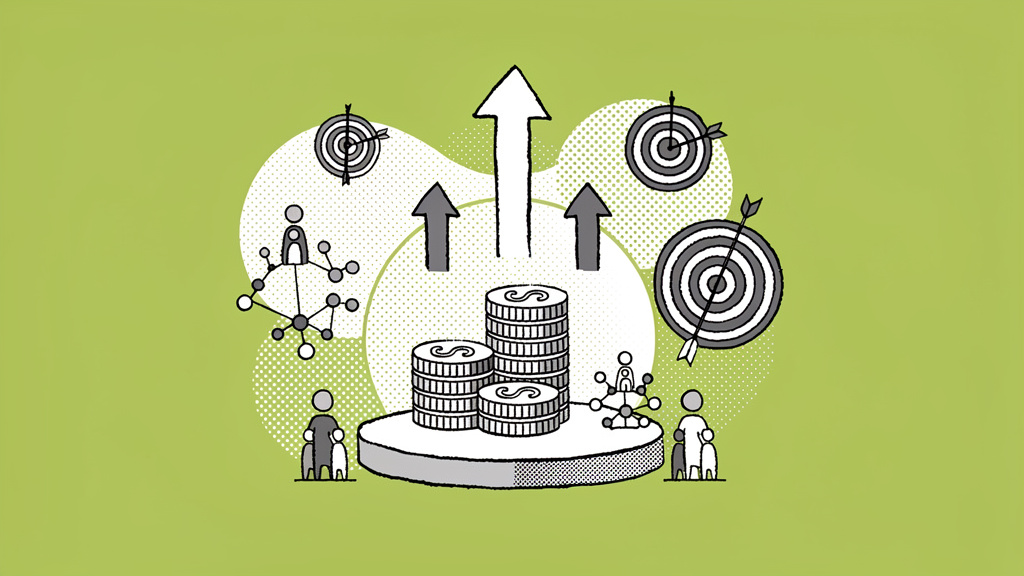
Somewhere between the quiet handshake deals of your quiet phase and the ribbon-cutting ceremony, there’s a stretch that trips up even seasoned fundraising teams. You’ve done the hard, relationship-heavy work of lining up board gifts and lead donors. Now you’re staring down the remainder of your goal, and it suddenly feels less like a hill to climb and more like a cliff to scale. That’s because the quiet phase and the public phase run on completely different fuel: one’s built on relationships, the other on momentum, clarity, and a little bit of psychology.
So how do you actually close that gap without losing steam right when you need to sprint? That’s what we’re digging into here: 12 practical, donor-behavior-backed ways to turn your public phase into the moment that finishes your campaign strong, not the moment it fizzles out.
1. Name the Gap, Then Sprint Toward It
“Help us finish strong” doesn’t move anyone. It’s vague, it’s safe, and donors tune it out. Specificity is what gets people to act.
- Make the gap visible: “We’ve raised $7.2M of our $10M goal, we need 1,000 community investors to close the final $2.8M,”
- add a countdown: tie the public goal to a hard date, like a groundbreaking deadline,
- keep it short: most capital campaign experts recommend a public phase of roughly three to six months, long enough to build momentum, short enough that it doesn’t lose its urgency.
Protip: frame what’s left in impact units, not just dollars. “We need 300 families giving $50/month” hits differently than a raw number ever will.
2. Segment, Digitize, and Multiply: Three Tactics That Work Together
Here’s the thing about the public phase: it’s not one audience, one message, or one channel. It’s a coordinated push across donor tiers and platforms, all at once.
| Tactic | Why It Works | Quick Action |
|---|---|---|
| Donor segmentation | community investors and “campaign closers” (uncommitted major donors, board members) respond to different messages | build two tracks: inclusion-based asks for the broad base, leverage-based asks for stretch-gift prospects |
| Digital-first giving | over 50% of nonprofit web traffic is mobile, and 63% of donations happen online via card (Funraise) | build a campaign landing page with a gap-focused progress bar and mobile-first donation form |
| Peer-to-peer fundraising | P2P fundraisers on Funraise raise an average of $1,220, roughly double top industry programs (Funraise) | recruit board and staff “Gap Closers” to run mini P2P campaigns with personal goals |
Funraise’s popup donation forms convert at an industry-leading 38%, with some campaigns hitting 50% (Funraise). If your current platform isn’t giving you numbers like that, it might be worth testing Funraise’s free tier just to see what’s possible on your own campaign page.
3. Turn Cultivation Events Into Conversion Labs
Big galas look great in photos, but they’re rarely where gaps actually close. Small, intimate gatherings do the heavy lifting.
- host campaign salons in board members’ homes where you show the gap plainly: “We’re at 78%; four more leadership commitments push us past 85%,”
- run site walk-throughs where donors invest in named spaces or “finishing touches,”
- keep your messaging clean: capital campaign gifts are separate from annual fund gifts. Blur that line and you’ll create hesitation and quietly cannibalize your general operating support.
Protip: lean on wealth screening and donor data tools to build your invite list around capacity and giving history, not just who lives closest to the project.
A scene you might recognize: A development director is three months into the public phase, watching gifts trickle in through a clunky, desktop-only donation form. The team’s manually pulling spreadsheets trying to figure out which channel is actually working. Nobody knows, in real time, whether the P2P push or the email series is driving more of the remaining gap, so they keep doing both, full effort, no data to tell them where to focus. Sound familiar? This is usually the exact moment nonprofits realize their tools weren’t built for a fast-moving public phase, and it’s usually when they start looking at Funraise.
4. Build Smarter Asks with Data, Not Guesswork
Closing a gap is about precision, not just brute-force volume. Use your historical giving data to build ask arrays for each donor segment, because lapsed major donors need a different ladder than your loyal small-gift folks. AI tools can help suggest personalized ask amounts based on past behavior, then hand the actual relationship-building off to a human for follow-up calls and coffee chats.
Try this prompt with your AI tool of choice:
Act as a capital campaign strategist. My nonprofit has raised [PERCENT RAISED] of our [TOTAL GOAL] and we have [NUMBER OF DAYS] left in our public phase. Our remaining donor segments are [DONOR SEGMENTS, e.g., lapsed major donors, first-time online givers]. Suggest a weekly messaging and ask-ladder plan to close the gap.Swap in your own numbers and segments, then drop it into ChatGPT, Claude, Gemini, or Perplexity. In our experience, it helps even more when the AI is built right into your donation forms and donor data, the way it is in Funraise, so suggestions come with full operational context instead of living in a disconnected chat window.
“The public phase isn’t the finish line, it’s the moment donors decide if your mission is actually urgent. Most nonprofits lose that moment by asking too politely.”
Funraise CEO Justin Wheeler
5. Make the Numbers Public and the Giving Recurring
Two things accelerate gap-closing more than almost anything else: transparency and flexibility.
Build a simplified public dashboard on your campaign site showing total raised, percent to goal, and new donor count. Share weekly milestones like “We added $75K this week; we need $120K/week to hit our deadline.”
Offer monthly recurring gifts tied explicitly to the project: “$40/month for 36 months completes our new wing.” Nonprofits using Funraise grow recurring revenue by 52% annually, and some retain 78% of sustainers after 12 months, beating industry benchmarks by 10 points (Funraise).
Protip: share real weekly numbers with your board and ask them to own the delta directly. Ownership creates urgency faster than any email blast ever could.
6. Stretch Every Dollar, Then Plan the Finish
Let donors cover processing fees. Funraise’s Donors Cover Fees model has generated over $8 million in fee coverage, with roughly 90% of donors opting in (Funraise). That effectively shrinks your gap without you needing to find a single new donor.
Design your finish-line moment before you launch. Plan a public celebration with real-time updates (“We’re at 97%; three gifts could close this tonight”), pair it with a challenge match, and have your stewardship plan ready to go the morning after.
People don’t just want to give to a campaign. They want to be the ones who finished it.
Closing the public phase gap isn’t about grinding harder for six months straight, it’s about designing urgency, clarity, and the right tools from day one. If your current donation forms, dashboards, and P2P tools weren’t built for that kind of speed, Funraise’s free tier is a pretty low-risk way to see what a public phase looks like with the right infrastructure actually behind it.
About the Author


Capital campaign pledge card: what to include so five-year pledges actually get paid
A five-year pledge is basically a promise stretched across sixty months of life. Kids graduate, budgets shift, priorities change, and somewhere in there, a commitment that felt rock-solid on signing day can start to wobble. If your capital campaign pledge card is just a name, a dollar amount, and a signature line, you're leaving way…
Capital campaign feasibility study: what it tests, who to interview and when you can skip it
Before you announce a $2 million building fund or float the idea of a $10 million endowment push, there's really one question that matters: will anyone actually give? A capital campaign feasibility study is how you find out, before you spend down donor goodwill and political capital on a campaign that wasn't quite ready for…
Endowment fundraising: how to ask for gifts that pay your nonprofit forever
Most of the asks you make this year fund… well, this year. Endowment asks are different animals entirely: they fund every year after that, forever. And that one distinction changes pretty much everything, how you frame the conversation, who gets invited into it, and what you're actually promising in return. If you're a nonprofit leader…