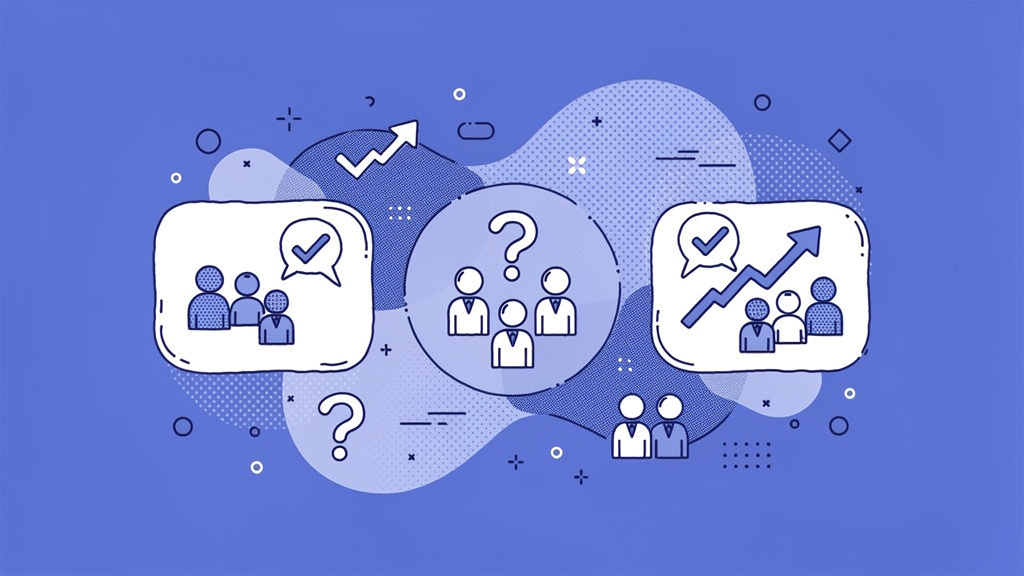
Before you announce a $2 million building fund or float the idea of a $10 million endowment push, there’s really one question that matters: will anyone actually give? A capital campaign feasibility study is how you find out, before you spend down donor goodwill and political capital on a campaign that wasn’t quite ready for the spotlight.
Think of it as intel-gathering before the big reveal. It tests your case for support, your goal, whether leadership’s actually aligned, and how deep your donor base really goes, all before you go public. In this piece, we’ll walk through what a feasibility study is designed to catch, who belongs on your interview list, what those conversations should surface, and when it’s actually fine to skip the whole process.
What a Feasibility Study Actually Tests
Here’s the thing: a feasibility study isn’t a simple thumbs-up or thumbs-down. It’s built to answer four core questions.
- does the case for support resonate? Does the project feel urgent, and is it framed well?,
- is the goal realistic? Can your donor base credibly back the number you’ve picked?,
- is leadership aligned? Do board members and staff actually know what’s expected of them?,
- is the organization operationally ready? Do you have the systems and people to pull this off?.
Underneath those four questions, the study’s really probing something deeper: gift capacity, gift inclination, leadership credibility, how strong your narrative is, and whether the community has confidence in you. This isn’t a mass survey, either. It leans on confidential, one-on-one conversations designed to stress-test your campaign hypothesis at specific gift levels.
Capital Campaign Pro’s 2026 benchmark reporting found something worth sitting with: organizations that ran feasibility studies were twice as likely to report stronger development staff effectiveness, better fundraising systems, and stronger major donor relationships (Capital Campaign Pro, 2026 Benchmark Report). So it’s not just validating the campaign goal, it’s actually strengthening the organization’s infrastructure along the way.
Protip: frame the study internally as a diagnostic, not a test. Boards tend to get squirmy about “failing” a feasibility study. Reposition it as a tool that sharpens the campaign before launch, and that resistance usually melts away.
Who to Interview: Capacity, Influence, and Honesty
Your interview list should be built around people who can give, open doors, or tell you the truth, not just whoever’s easiest to reach.
| Interview group | What they help test | Why they matter |
|---|---|---|
| Board chair and board leaders | Governance and internal alignment | Signals whether the campaign has leadership gravity |
| Major donors (current and past) | Case strength, gift ranges, objections | Reveals whether the campaign is fundable in the real world |
| Prospective lead donors | Willingness to stretch | Shows whether lead gifts are plausible |
| Community, business, foundation leaders | External credibility | Reflects how the broader philanthropic community will react |
| Senior staff and advancement leaders | Operational readiness | Exposes capacity gaps before launch |
A strong interview list is selective, not exhaustive. Feasibility planning guidance suggests 25 to 40 people, each in confidential one-on-one sessions running 45 to 60 minutes. When picking names, weigh wealth markers, affinity markers, and propensity: giving history, board service, and a track record of supporting similar causes.
Protip: if you have to shorten the list, prioritize people who bring capacity, honesty, and influence together. Ten candid conversations with the right people will teach you more than thirty polite ones with cheerleaders who’ll never push back on your assumptions.
Try This Prompt Before Your Next Interview Round
Want a fast way to sharpen your interview questions? Copy this into your AI tool of choice.
Act as a nonprofit capital campaign consultant. I am preparing feasibility study interviews for a [ORGANIZATION TYPE] planning a [CAMPAIGN GOAL AMOUNT] campaign to fund [PROJECT DESCRIPTION], with a target launch in [TIMELINE]. Draft 12 open-ended interview questions that test our case for support, gift capacity, leadership credibility, and hidden objections, grouped by donor tier.In the day-to-day of fundraising, it helps a lot to work with platforms that have AI built right into the workflow, so your donor data, campaign notes, and giving history are already sitting there when you generate questions like these. That's part of why teams like Funraise, which folds AI-assisted tools into the same place they already manage donor relationships, instead of making staff bounce between five different apps.
What the Interviews Should Actually Reveal
A well-run study goes beyond "would you support this?" It's after what conditions need to be true for the campaign to actually succeed. So interviewers should dig into the case for support, whether the goal feels believable, leadership readiness, and the objections donors aren't saying out loud.
One question in particular tends to crack things open: what hasn't the organization said out loud yet? That question has a way of surfacing the hidden friction, fear of overreaching, doubts about leadership, unclear priorities, that would otherwise derail the campaign months later.
And the payoff for doing this well is real. Capital Campaign Pro's 2023 research found organizations that ran a feasibility study reported 94% stronger major donor relationships and raised 115% of their original campaign goal (Capital Campaign Pro, 2023 Report).
The Failures We See Before Organizations Fix Their Process
Working alongside nonprofit leaders across sectors, we keep bumping into the same patterns, right before teams tighten things up.
- the goal got set by hope, not data. A board decides "we need $5 million" without checking whether the donor base can actually carry that number, and the campaign quietly stalls out around 60%,
- the case for support was written for staff, not donors. Interviews reveal community members don't actually get why the project matters right now, because the messaging leans too hard on internal jargon,
- nobody owns the follow-up. Feasibility interviews happen, insights get collected, and then... nothing. No one translates the findings into a revised strategy because the data's scattered across spreadsheets instead of living in a connected CRM,
- leadership assumed alignment that was never actually there. Board members privately hold very different ideas about their fundraising role, exactly the kind of thing a candid interview process would've caught months earlier.
This is usually the moment organizations start looking for a system that keeps donor insights, campaign notes, and interview findings together instead of scattered across disconnected tools, which is often when they discover Funraise's free tier is enough to get organized before scaling up to the premium platform.
"A feasibility study isn't there to protect your ego, it's there to protect your donors' trust before you ask them for the biggest gift of their giving history."
Funraise CEO Justin Wheeler
When You Can Skip the Study
Most capital campaigns benefit from a feasibility study, but it's not a hard rule. You might scale it down or skip it altogether when:
- the project's small enough to fold into annual fundraising instead of needing its own standalone campaign,
- funding sources are already lined up, meaning most of the project is already committed by known donors,
- your organization runs continuous capital-style asks and already has a tested donor culture and internal infrastructure to match,
- the initiative isn't really a capital campaign, think a modest equipment purchase or a limited renovation.
The real question isn't "can we avoid this expense?" It's "what's the cost of being wrong?" If a misfire would dent credibility, donor confidence, or board trust, the study is almost always worth what it costs.
Protip: if you do decide to skip the full study, don't skip readiness entirely. Swap it for a structured internal review, informal donor conversations, staff interviews, or a lighter planning assessment.
The Bigger Picture: Trust Is the Real Currency
Donor retention across the sector is still a struggle, hovering near 32% overall in Q3 2025, with repeat donor retention around 44% (Funraise, State of the Nonprofit Sector 2026). In a low-retention environment like that, campaign success rides heavily on the trust you've built before the ask, which is exactly what a feasibility study is designed to test.
Worth noting, too: organizations that invested in strong fundraising systems saw real payoff last year. Funraise customers increased online revenue by 26% on average in 2025 (Funraise, Growth Stats), a good reminder that disciplined infrastructure and readiness pay off well beyond the campaign itself.
Whether you run a full feasibility study or a lighter readiness check, the goal's the same: know the real answer before you ask the big question.
About the Author


Capital campaign pledge card: what to include so five-year pledges actually get paid
A five-year pledge is basically a promise stretched across sixty months of life. Kids graduate, budgets shift, priorities change, and somewhere in there, a commitment that felt rock-solid on signing day can start to wobble. If your capital campaign pledge card is just a name, a dollar amount, and a signature line, you're leaving way…

Endowment fundraising: how to ask for gifts that pay your nonprofit forever
Most of the asks you make this year fund... well, this year. Endowment asks are different animals entirely: they fund every year after that, forever. And that one distinction changes pretty much everything, how you frame the conversation, who gets invited into it, and what you're actually promising in return. If you're a nonprofit leader…
Capital campaign fundraising ideas: 12 ways to close the public phase gap
Somewhere between the quiet handshake deals of your quiet phase and the ribbon-cutting ceremony, there's a stretch that trips up even seasoned fundraising teams. You've done the hard, relationship-heavy work of lining up board gifts and lead donors. Now you're staring down the remainder of your goal, and it suddenly feels less like a hill…