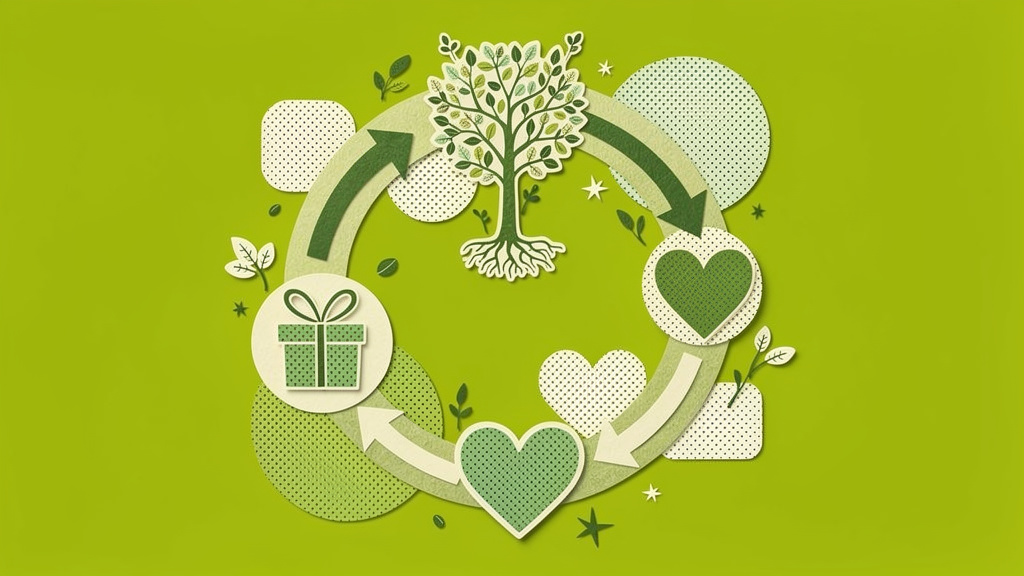
Most nonprofits pour enormous energy into acquiring new donors, then treat retention as an afterthought. The result is a leaky bucket that demands constant refilling. The donor cycle framework flips this logic entirely, treating every gift not as a transaction but as the beginning of a relationship worth investing in for years to come.
In this post, we’re doing a li’l deep dive into how to move donors from their first contribution to lifetime support. We’ll walk through each stage of the cycle, flag the most common places organizations lose donors, and share some practical tools you can start using right away.
Why the Donor Cycle Framework Changes Everything
The donor lifecycle is the systematic process of identifying, engaging, and retaining donors over time (Funraise). And here’s the thing: it rests on one uncomfortable math problem. It costs approximately 10 times more to acquire a new donor than to retain an existing one (Funraise). That single number should reshape your entire budget conversation.
When you stop treating donors as transactions and start treating them as long-term partners, the economics of fundraising transform pretty quickly. Recurring donors remain donors for an average of 8.08 years, while non-recurring donors average only 1.68 years (Blackbaud). That’s nearly a five-fold difference in lifetime value, earned not through aggressive tactics but through consistent, intentional stewardship. So yeah, the framework matters.
The Four Stages: A Framework You Can Actually Use
The donor cycle breaks into four connected stages, each requiring different strategies, communication styles, and success metrics.
| Stage | Primary Goal | Key Activities |
|---|---|---|
| Identify | Build your prospect pipeline | Wealth screening, board networks, event data, giving history analysis |
| Cultivate | Build authentic connection | Impact stories, educational content, event invitations, mission alignment |
| Ask | Make a strategic solicitation | Personalized appeals, one-on-one meetings, capacity-based gift requests |
| Steward | Convert to lifetime supporters | Thank-yous, impact reporting, upgrade invitations, recurring giving programs |
Think of these stages not as a linear funnel but as a continuous loop. Great stewardship creates natural upgrade opportunities, deeper engagement, and more consistent giving over time.
Protip: Document donor communication preferences in your CRM and honor them. Some donors want bi-weekly emails; others prefer a single phone call in November. Treating those preferences as sacred earns trust that no appeal letter can replicate.
The First-Gift Problem Is Real and Fixable
Here’s the most important number in nonprofit fundraising: only 19% of first-time donors make a second gift (Fundraising Effectiveness Project via Funraise). In contrast, existing donors maintain a 69% retention rate (Funraise). The gap between those two numbers is where most organizations quietly lose revenue, often without realizing it.
The critical window is the first 90 days after an initial gift. What happens in that period determines whether someone becomes a loyal supporter or a one-time statistic. Digital-first nonprofits achieve 53% retention rates across all channels, compared to the industry average of 45% (NextAfter), suggesting that strategic investment in digital touchpoints during this window pays measurable dividends.
And here’s the good news: this problem is fixable with deliberate process design. It doesn’t require a larger team. It requires a smarter system.
Identifying and Cultivating Prospects the Right Way
Strategic prospect research should look at giving history, affinity markers, relationship touchpoints, and wealth indicators. But identification means nothing without qualification. Not every prospect is ready for the cycle, so it’s worth evaluating each person based on engagement level, demonstrated capacity, and readiness to receive an ask.
Once you’ve identified strong prospects, cultivation is where most nonprofits underinvest. This phase is about creating genuine connection before money ever changes hands. Effective cultivation includes sharing educational content about your work, inviting prospects to volunteer or attend events, and providing personalized storytelling that connects to each donor’s motivations.
One counterintuitive principle worth building into your strategy: treat every page of your website as a potential donation page (Funraise). Prospects evaluate your organization across all digital touchpoints, not just your giving form. Make your mission visible and giving accessible everywhere.
Protip: Use your board members and existing donors as your first prospecting layer. A warm peer introduction carries more weight than any cold outreach campaign and dramatically increases the likelihood of meaningful engagement.
AI Prompt: Map Your Donor Cycle in Minutes
Ready to think through your donor cycle more strategically? Copy and paste the prompt below into your preferred AI tool, whether that’s ChatGPT, Gemini, Claude, or Perplexity, and swap in your specifics for each variable:
You are a nonprofit fundraising strategist. Help me design a donor cycle communication plan for [ORGANIZATION NAME], a nonprofit focused on [MISSION/CAUSE]. Our current donor base is approximately [NUMBER OF DONORS] people, and our average first gift is [AVERAGE GIFT AMOUNT]. Map out specific touchpoints, messaging themes, and timing recommendations for each of the four stages: Identify, Cultivate, Ask, and Steward. Focus especially on improving second-gift conversion rates within the first 90 days after an initial donation.This kind of strategic thinking gets even more powerful when it happens directly inside your fundraising platform. Tools like Funraise have built-in AI components that work with your actual donor data, giving you full operational context rather than generic advice. It’s worth exploring what that looks like in practice, and Funraise lets you start for free with no commitment required.
The Ask and the Art of Strategic Solicitation
A well-executed ask should feel like a natural next step, not a surprise request. By the time you reach solicitation, your cultivation work should have already answered the donor’s most important questions about your credibility, your impact, and why their gift matters.
Effective asks share a few non-negotiable qualities. They’re specific, citing an exact amount based on capacity research. They’re emotionally compelling, connecting to what the donor actually cares about. And they’re clear about impact, showing precisely what the gift will accomplish.
The Innocence Project, a Funraise customer, is a great example of what this looks like in practice. By focusing on strategic giving experiences and thoughtful recurring donor upgrades, they grew online revenue 50% year-over-year from 2021 to 2022 while adding 10,000 unique new donors (Funraise). That growth came from smarter stewardship, not louder asking.
“The nonprofits that grow sustainably are not the ones sending the most appeals. They are the ones who have built systems that make donors feel genuinely seen between asks.”
Funraise CEO Justin Wheeler
Stewardship Is Your Actual Growth Engine
Many nonprofits treat stewardship as a courtesy. The most effective ones treat it as a revenue strategy. Done well, stewardship accomplishes three things at once: it retains the donor, deepens emotional investment, and creates upgrade opportunities.
Your core stewardship commitments should include:
- a personalized thank-you within 48 hours,
- impact storytelling that shows what the specific gift accomplished,
- regular communication matched to donor preference,
- upgrade invitations introduced at natural relationship milestones.
Think of it less like a to-do list and more like tending a friendship.
Funraise customers practicing strategic engagement and recurring donor focus have achieved donor retention rates as high as 98% (Funraise Podcast). While that’s exceptional, it demonstrates what systematic stewardship can produce when it’s treated as the primary growth mechanism rather than an administrative checkbox.
Protip: Automate recurring donor card expiration alerts. Payment failures cause preventable attrition. Platforms like Funraise include card updaters and expiration notifications that quietly reduce involuntary churn before it shows up in your retention numbers.
What We See Every Day: Common Stewardship Failures
These are real situations that nonprofit leaders face before putting systems in place.
The disappearing organization. A campaign launches, donors give generously, and then silence. No impact update, no thank-you beyond a receipt. The donor assumes their gift didn’t matter and gives elsewhere next year.
The expired card nobody caught. A loyal monthly donor’s card expires in March. Nobody notices until the annual report in December. Six months of lapsed giving and a broken relationship, both preventable with one automated alert.
The one-size communication strategy. A major donor receives the same mass email as a first-time $25 giver. The message doesn’t resonate, the donor disengages, and the organization never understands why.
The missing second ask. A donor makes a generous first gift. The organization spends the next 12 months in gratitude mode without ever introducing a natural upgrade opportunity. A year later, the donor gives the same amount again while their capacity to give much more goes untapped.
These aren’t failures of intention. They’re failures of system. And the right infrastructure makes each of them solvable at scale.
Building the Loop That Drives Sustainable Growth
Optimizing your retention rate from the industry average of 45% to 53% doesn’t just mean keeping more donors. It creates compounding revenue growth year after year, where a smaller acquisition investment combined with strategic upgrades generates results that outperform any single campaign.
In our experience, the highest-leverage moves are:
- auditing where donors are leaking at each cycle stage,
- investing heavily in first-gift conversion within the first 90 days,
- implementing segmentation so different donor types receive relevant communication,
- automating stewardship so personalization scales with your organization.
The donor cycle is ultimately a philosophy. Donors are humans on their own charitable journey, not transaction targets. When your systems reflect that reality, retention rises, lifetime value multiplies, and your organization builds the reliable revenue foundation that mission impact actually requires.
Sources: Funraise, NextAfter (January 2024), Blackbaud (Donor Cultivation Cycle), Funraise Podcast (April 2025), Fundraising Effectiveness Project via Funraise.
About the Author


Donor management software comparison for major gift teams: moves, pledges and capacity tracking
Major gift fundraising isn't really a spreadsheet problem, even though most software gets evaluated like it is. It's a relationship problem. It's a math problem. And honestly? It's a prioritization problem too, all rolled into one messy job. So when nonprofits pick donor management software the same way they'd pick an email tool, checking only…
Donation tiers: the psychology of the middle option and how to price your giving levels
Look at any donation form and you'll see the same setup: three or four suggested amounts sitting there, looking totally unremarkable. But here's the thing, those little numbers are doing a lot more work than they let on. They quietly tell donors what "normal" giving looks like on your page, and whichever amount sits in…

What major donors want: 10 things they expect before, during and after the gift
Major donors don't just wire money because they're feeling generous that day. They're making strategic bets on your mission, and honestly, they're sizing you up at three different moments: before they say yes, during the actual gift conversation, and after the money lands. Get a handle on what they're expecting at each stage, and you…